Leaderboard
728x15
Showing posts with label Clinical Guidelines. Show all posts

Guidelines for Guidelines

"Guidelines" (like these) drive health leaders, policymakers, politicians and caregivers crazy. They're supposed to describe "evidence-based" "best practices" for diagnosis, treatment and overall management for hundreds of medical problems. Yet, it's been known for years they often go ignored by many practicing physicians who are unaware of them, would rather rely on their individual independent judgment and experience, doubt their validity or would rather continue with what they've done for years.

What's the problem? Is it the guidelines or is it the docs?

Johns Hopkins' Peter Pronovost, writing in the Dec. 5 JAMA wonders if both can be helped with some common sense guidelines for guidelines:

1. Any guideline should prioritize its recommendations (based on patient benefit) and explicitly link them to "time and space" of a specific point in the course of an episode of care  The author points out that it's not uncommon for guidelines to be more than a hundred pages and simply list all the recommendations.

2. Guidelines should identify the barriers to their adoption and recommend strategies for their successful implementation.  Naturally, the developers of these guidelines would need to climb down from their ivory towers and actually think (and maybe perform research) on getting the guideline into the front lines of real-world health care.

3. Guidelines need to contemplate co-existing conditions and stop focusing on single diseases or risks.  In a hospital, it's not unusual for safety checklists to deal with single issues, resulting in dozens of lists.

4. Automate automate automate and use "systems" of care instead of relying on the memory and best intentions of human beings.  Robotics can do a lot of routine monitoring, patient work flows can incorporate safety and docs and nurses should be freed to be..... docs and nurses!

5. Develop "practice strategies" that integrate multi-disciplinary teaming and pools expertise in the related sciences of epidemiology, implementation and engineering.

The DMCB agrees with the ideas and wonders if these recommendations can't also be used by Accountable Care Organizations, health care systems and population-based service providers as they seek to disseminate best practices for the care. It's one thing to "post" or "link" a standard guideline in an intranet or an electronic health record "prompt," it's another to make it useful at the point of care.

Taking Patient Preferences Into Account When It Comes to Pursuing and Measuring Quality

Here's a thought: ask them what they want
One of the intellectual underpinnings of population health management is that the biopsychosocial dimensions of care is a huge determinant of real-world outcomes. As any doctor who takes care of flesh-and-blood patients knows, national treatment guidelines like these typically fall short of taking the human dimension into account. While there are plenty of good and bad reasons why docs are failing to take advantage of guidelines, one is their sterile one-size-fits-all approach that often fails to account for physician awareness of their patients' risk tolerances and economic circumstances. What's more, many widely promoted treatments only offer a small absolute benefit.

Fortunately, this disconnect is bubbling up into the mainstream scientific literature. The latest example is this Viewpoint that appears in the October 28 issue of JAMA. The authors point out that the perspectives of expert physicians who develop guidelines are typically different than the general public, caregivers or persons with a disease. For example, while the NCQA promotes an A1c threshold as a important measure of diabetes care quality, a compelling survey of patients with diabetes suggests that that emphasis may be displaced.

Where to from here? The JAMA authors offer three commonsense recommendations. Future guidelines should:

1. be developed with the input of patients and frontline clinicians.

2. encompass the full range of patient experiences, not outcomes. This means accounting for the  burden, impact on quality of life and role function dimensions of any treatment recommendations.

3. avoid strong recommendations when the best course of action depends on the patients' context, goals, values and preferences.. Lacking a clearly advantageous outcome with minimal side effects, guidelines should offer a conditional suggestions.

The DMCB modestly offers up three additional suggestions for the population health community and other stakeholders:

1) Absent a satisfactory guideline process from the usual national organizations, it would not be a bad idea to take this bull by the horns and develop a parallel set of guidelines that meet the principles outlined in this JAMA article.

2) Organizations like the NCQA and NQF need to be more flexible in promoting evidence-based guideline-based metrics by moving away from a reliance on their monodimensional clinical measures and toward more nuanced measures of meeting patient preferences.

3) Finally, while national variation in health care delivery is a huge challenge as we continue to build a coherent health system, it may be time to reconsider the notion that all variation is bad. Human beings are variation, and the likelihood of imposing local "best practices" across the U.S. will not be in the best interest of patients with different views of what it best for them.

Image from Wikipedia

The Limits of Decision Analysis in Real World Health Care

Decision tree logic
Tired of hyper-rational experts using opaque decision logic to pass judgement on the value of your favorite medical tests or treatments?  Do you disagree with the Disease Management Care Blog's infatuation with Quality Adjusted Life-Years (QALYs)?  Then you may want to check out this article on "There Is More to Life Than Death" by Pamela Hartzband and Jerome Groopman.

Classic decision analysis combines "probability" and "utility" to mathematically compare multiple care options that lead to hard outcomes such as death, disability or cure (an example is here).  Unfortunately, say the authors, this imposes numbers on a narrow set of possibilities that fail to account for the full range of outcomes.  For example, the recent controversial and arguably nihilistic breast and prostate cancer screening recommendations were informed by decision analysis. While that methodology may have its place, "More to Life" argues that this sterile approach fails to account for the full range of physical and psychological burdens that can result from delayed diagnosis and inappropriate treatment.

While decision analysis attempts to make up for its shortcomings with additional analytics, Drs. Hartzband and Groopman argue that much of the underlying premise is fundamentally flawed by its failure to capture highly individual interpretations of what it means to be sick and how that can vary over time.  Distilling this down to a limited set of uni-dimensional outcomes centered on death, disability or cure ignores the "vital dimensions of life that are not easily quantified."

Yikes.

It's it own defence, the DMCB's fondness for decision analysis has been based on its insights, not on its answers.  In other words, it's a tool can open one window on the truth.  What Drs Hartzband and Groopman charge, however, is that the science of clinical guidelines is being hijacked by an over reliance on decision analysis by out-of-touch experts.  That's a serious charge that will complicate the national effort to disseminate scientific guidelines into every nook and cranny of medical practice.

Which leads the DMCB back to another fond topic that ultimately trumps all others: the need for an informed and engaged patient to process clinical guideline recommendations, the advice of a physician, the opinions of friends and family and their own personal values to ultimately make the decision for themselves about testing and treatment. 

Decision analysis alone is not up to the task.

The Link Between Personalized Medicine and Worksite Wellness

Critics look at employee wellness
Only the Disease Management Care Blog can link population health, a JAMA "Viewpoint" article on personalized medicine and a Wall Street Journal editorial on the alleged futility of worksite wellness.

The DMCB explains.

The JAMA article, written by Drs. Goldberger and Buxton, illuminates the cognitive dissonance over guideline-based vs. personalized medicine

The former represents the best care advice for a condition based on a published body of evidence.  Makes sense, but that evidence is typically based on multiple research studies involving populations that are both broad (able to generate statistically significant data) and representative (similar to other patients with the same disease). 

The latter describes tailored medical treatment that is suited to the individual characteristics (and personal preferences) of each patient.  This suggests that within the flow of "populations" that form the basis of a generalized guideline, there are circumstances for some persons that might make a particular treatment of greater or lesser benefit.

While Goldberger and Buxton use a complicated example involving implantable cardioverter defibrillator therapy to illustrate the conundrum, the DMCB has a simpler example.  Current guidelines support yearly mammography in every woman over the age of 50 years. Does that apply for the terminally ill woman in hospice or for a woman who, despite the advice from her physician, decides to forgo the test?

Intellectually reconciling competing policies of guidelines, such as "best practice," "reducing variation," "benchmarks" and "pay-for performance" on one side vs. personalized "informed consent," "patient empowerment" and "clinical judgment" involves subpopulations.  In other words, within any population-based study that shows an intervention is of benefit (mammograms save lives) there are subpopulations where the intervention is of little to no benefit (exceptions to every rule).

Which brings the DMCB to this provocative Wall Street Journal editorial condemning the entire worksite wellness industry. It recycles a number of tiresome criticisms, including outcomes tainted by regression to the mean, over-reliance on process-based outcomes, selection bias, employee discrimination, savings vs. program costs and overdiagnosis.  

Another criticism of the industry is the need for workforce-level (total) savings vs. per-participant savings. Since wellness programs typically focus on subpopulations of employees at greatest risk who are most likely to benefit and willing to participate, the observed savings can be limited to a few patients.  Unless those savings are culled from the large pool of total health insurance claims, they are otherwise invisible and critics will unfairly pounce.

Worksite wellness offers personalized care for limited numbers of patients.  That is its essential value proposition and its curse.  Until we can reconcile the total care via standardized guidelines vs. a more nuanced approach using personal care, it will continue to be criticized.

Patient Perceptions of Risk, Media Innumeracy and The Enduring Futility of the Annual Check Up

Today the DMCB caught up on some reading of the medical literature. 

The first article is an example of how researchers' risk thresholds don't match patient perceptions.

The second article is an example of media innumeracy

The third article is likely to be ignored by everyone.

1. Should Cardiac Telemetry Not Be Used for Patients with Only a Three Percent Chance of a Problem?

Suppose, asks the Disease Management Care Blog, your elder family member mysteriously passed out and was seriously injured?  You would wonder if a cardiac problem could be the cause. While the likelihood of that is typically low, even the small chance of something being "wrong with the heart" is enough to make patients and their families worry.

But suppose the chance of a heart problem was only.... 10%?  Or 5%? Or 1%?    

Once a decision is made to admit a patient with loss of consciousness to a hospital, doctors typically arrange for "cardiac telemetry." That broadcasts the electrocardiogram on an ongoing basis to a monitoring unit.  Unfortunately, however, the demand for a hospital telemetry "slots" is high and the monitoring requires additional personnel.

As a result, clinical guidelines like these have been developed.  They define high risk patients who warrant telemetry and low risk patients who don't.  For example, patients who have had a recent heart attack are vulnerable to unstable heart rhythms, while patients with stable atrial fibrillation can probably be safely managed off telemetry. Patients who have passed out and are stable on telemetry after 3 days are considered low risk.

Enter Evan Benjamin and colleagues who applied the guidelines to a retrospective audit of how telemetry was used for 501 consecutive patients at four Massachusetts medical centers.  Since patients could transition from high to low risk as the days passed, the unit of measure was "patient-days" (if two patients were each on telemetry for 4 days, that yielded eight "patient-days"). 

38% of the total 1559 patient-days were low risk. Among the high risk patients, a heart problem was detected in 21 out of 100 patient-days.  In the low risk patients, a problem was detected in 3 out of 100 patient days. 

The authors argue that these data show that better enforcement of guidelines that restrict access to telemetry would result in more cost-effective care.  The DMCB isn't so sure, because it intuitively thinks most patients and doctors would consider a 3% (3 out of 100 patient-days) a low enough threshold to warrant monitoring.

Good luck, says the DMCB, enforcing that. 

2. Just How Bad is the Link Between Red Meat and Diabetes?

"Yikes!" said the DMCB after listening to this NPR broadcast and reading this WSJ article.  It appears that increasing red meat consumption increased the risk of diabetes among previously healthy people "by 50%!"  While its first impulse was to throw away those frozen strip steaks, the DMCB took a deep breath and did something the reporters neglected to do: read the article.  It turns out that the approximate risks went from approximately 0.2% to 0.3%.  More than 99% of the carnivores did fine.  Once again, the reporters failed to discern that while the relative risk was high, while the absolute risk was vanishingly low.

3. A Reminder that the Annual Check Up is a Waste of Time and Money

After reviewing 16 studies involving over 180,000 participants, the authors in this JAMA study concluded:

.... general health checks were not associated with lower rates of mortality or morbidity.  However, general health check may increase the number of diagnoses and the use of medications.

The irony is that The White House and CMS profess to being evidence-based while remaining simultaneously committed to "wellness checks."

Image from Wikipedia

More On The Politicizing of Preventive Health Care: Keeping the Feds Out of the Way

Guideline experts at work
Max Levin of the Health Diplomat Blog isn't sure about the DMCB's suggestion that guideline interpretation for health care coverage decisions (including preventive care)be decentralized.  While pushing responsibility down to the local health plans and provider organizations would certainly defang the powerful special interests, Max points out that without a nationally recognized guideline "Good Housekeeping" seal of approval, charlatans and hucksters will be able to foist their pseudo-clinical recommendations on an unsophisticated and unsuspecting public.

Max has a point, but the DMCB isn't changing it's mind:

1. When one big national guideline gets it wrong, the damage involving thousands of patients can be considerable. Examples include years of supporting preventive estrogen for post-menopausal women and aggressive blood glucose control among persons with diabetes.

2. While advocates and lobbyists are just as able to swindle unsuspecting managed care and ACO leaders, they'd need to do so among hundreds of provider organizations.  When power is concentrated in Washington DC, all they have to do is convince one Congressman.

3. In the DMCB's experience, health insurers and ACOs are not only highly expert, but more skeptical when it comes to interpreting clinical trial data and deciding the fit in coverage decisions. For an example of their first-do-no-harm conservatism, recall how managed care refused to cover bone marrow transplants for breast cancer.

4. Last but not least, even Atul Gawande pointed out how "local" health care is.  It's up to communities to create working systems out of the complex fragments of health care that best fits the local population.

The Feds should assure guidelines are incorporated in coverage decision-making.  They can accomplish that through the regulatory process, periodic audits and during the appeals process.  Otherwise, says the DMCB, they should stay out of the way.

What GM's Ignition Switch Travails Can Teach About Concentration of Risk: Implications for Large Integrated Delivery Systems

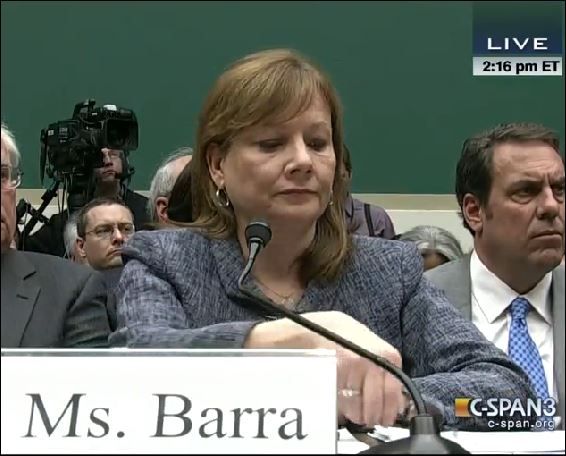
CEO Barra not having a
good day at a Congressional hearing
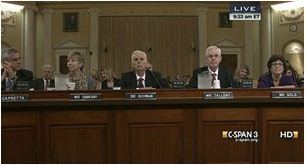
Today, the motoring Population Health Blog used its C-SPAN enabled car radio to listen in on the U.S. House Energy and Commerce Subcommittee's grilling of General Motor's CEO Mary Barra.  As the PHB understands it, GM allowed millions of its cars to stay on the road despite awareness among some of its executives of a faulty ignition switch that failed to "meet specifications."  It was deployed in seven GM models for over a decade.

The PHB can assure readers that when it comes to using "gotcha" yes or no questions on a humbled CEO to plumb the meaning of "specifications," Congressional bipartisanship is alive and well.

While GM is completing its internal investigation and the PHB is speculating, it's possible that GM's travails are ultimately the result of concentrated risk.  While standardization across automobile manufacturing is a no-brainer, it all came down to a weeny metal spring's inability to hold a plunger in place. That led to a loss in power in moving cars with a catastrophic failure of steering, brakes and airbags.

Which naturally brings the PHB to health care.

In a recent chat with a well-connected and savvy colleague, it was pointed out that some health leaders are predicting that, in the years to come, health care in the United States will be delivered by a network of dominant regional integrated delivery systems.  Many policymakers naturally welcome the prospect of "postindustrial care" that is replacing a highly variable and unmeasured cottage industry with guideline-driven science and standardized protocols.  Part of that standardization will almost certainly include uniform treatment pathways and medical devices.

The problem? 

Never mind that some guidelines may not work as well as intended.  They can actually cause harm. Medical devices, just like ignition switches, are also not perfect and can lead to (for example) broken pacemaker wires or premature artificial joint failures.  While guideline and device mishaps are infrequent, the rise of "systems" means they're more likely to involve many more people when they inevitably do happen.

That's because these large regional delivery systems will be favoring single processes and products across all patients and all settings.  Instead of a flawed ignition switch in seven models, think of flawed pacemaker in all seven hospitals serving three states.

What's more, it's possible that GM decided that a low rate of failure (ultimately only 31 accidents with 13 fatalities) represented an acceptable cost-risk ratio.  The PHB recalls GM was financially ailing during the period in question; could it have decided that retooling a manufacturing process was too expensive?  If future integrated delivery systems also turn out to be financially stressed, will they likewise be tempted to stick with an old pacemaker or metal joint, despite early indications of problems?

Oh, and if you think it's just a matter of better government oversight, tell that to Acting Administrator of National Highway Traffic Administration, David Friedman .  He was seated next to Ms. Barra and was asked about his decision not to act on switch complaints as far back as 2007.

Risk is unavoidable.  It's just a matter of anticipating it in all it's many forms.  Assuming these big regional systems turn out to have traction, this concentration of risk will be a feature of them. 

The PHB leaves it to its readers to decide if it's worth it.
Leaderboard