Leaderboard
728x15
Showing posts with label Health Information Technology. Show all posts

Follow-Up on Electronic Health Record Portals: We're Asking the Wrong Question (and the DMCB is guilty)

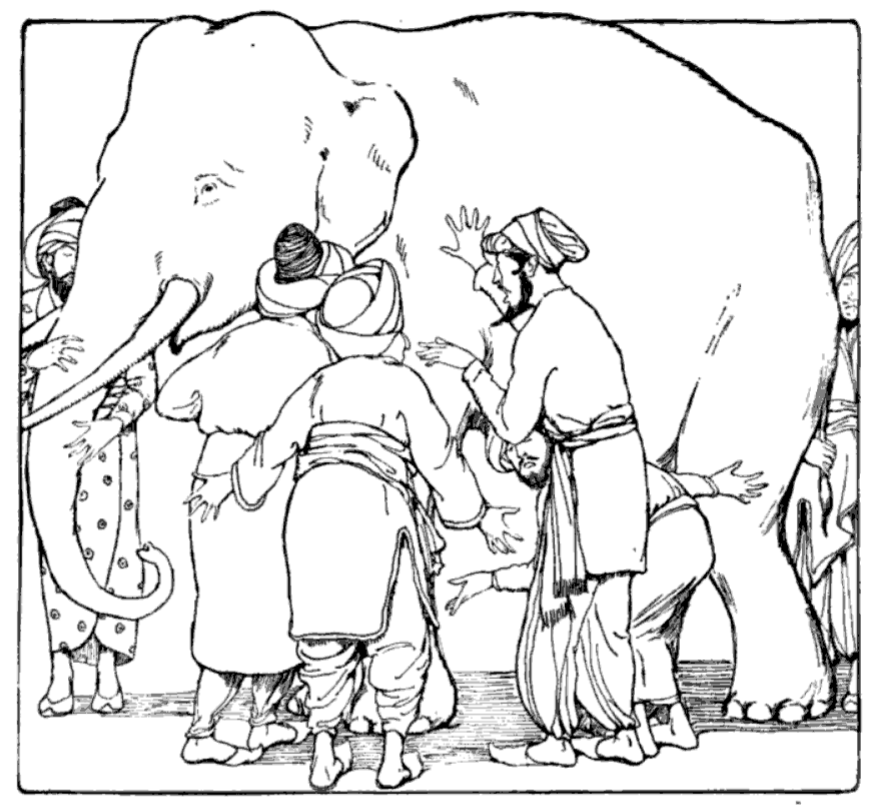
Researchers pondering the EHR portal
Thanks to Twitter, the @DisMgtCareBlog had a highly rewarding tweetologue with tweetociates @Paulflevy (with an insightful bit of bloggery here), @granitehead and @subatomicdoc about a recent DMCB post on the topic of electronic health record (EHR) patient portals. As readers will recall, yet another notion of the Lilliputian Order of Unquestioning EHR Believers failed to pass scientific muster when The Annals published a negative review on patient portals. Tweeples took note with a series of tweets that simultaneously advanced the DMCB's social media chops and the antipathy of the how-does-this-make-money? DMCB spouse.

To tell the truth, however, the skeptical DMCB took unfair advantage of this latest EHR kerfuffle. It confesses that it couldn't resist this latest addition to the target-rich environment of HIT disappointments in quality, cost and governmental overreach.

So, upon further reflection, just because almost 15 years of high quality research failed to establish any lasting value doesn't mean portals should go the way of the Dodo, low-cost medical malpractice insurance or Mr. Obama's credibility.

In other words, the DMCB does think that portals have a role to play in the health care reform landscape, and it said so in front of a huge audience at the recent Star Ratings Conference in Fort Lauderdale.

Portals, thinks the DMCB, have little value as stand-alone interventions. Just dropping it into a clinic's patient population is unlikely to significantly increase communication and shift behaviors enough to produce enough of a "signal" that cost or quality outcomes are better compared to usual care.

But when EHR portals are part of a multi-channel outreach strategy that includes (but is not limited to) mailings, interactive voice response-based calls, secure messaging, emails, social media, "anniversary" time-for-your-appointment cards, live telephony as well as home visits that are all backed by predictive modeling (who is at greatest risk) that informs "impactability" (how they're at greatest risk) that's all tethered to care management that is also closely aligned with marketing and builds brand, then portals mostly likely do add value.

Unfortunately, traditional health services research cannot assesses the multiple simultaneous interventions described above.  As Dr. Donald Berwick presciently noted in this classic JAMA article:

Experimentalists have pursued too single-mindedly the question of whether a [social] program works at the expense of knowing why it works. Thus, although [traditional research] seeks generalizable knowledge...it relies on removing most of the local details about “how” something works and about the “what” of contexts. It therefore reveals little about mechanisms or about factors that affect generalizability. Studying a few covariates, or using stratified designs, or probing for interactions can mitigate this loss, but these are inadequate tools for studying complex, unstable, nonlinear social change.

As the DMCB has noted before, absence of any proof is not the same as proof of absence.  The studies that the DMCB ultimately quoted were based on traditional research, which is simply not up to the task of the non-linear intervention of patient-doc-team communications.

Don Berwick recommends a more insightful approach:

Health care researchers who believe that their main role is to ride the brakes on change—to weigh evidence with impoverished tools, ill-fit for use—are not being as helpful as they need to be. “Where is the randomized trial?” is, for many purposes, the right question, but for many others it is the wrong question, a myopic one. A better one is broader: “What is everyone learning?” Asking the question that way will help clinicians and researchers see further in navigating toward improvement.

When it comes to EHR portals, it's time we ask just what are we learning.

Health Information Technology and the Patient Centered Medical Home: Seven Additional Caveats

The Disease Management Care Blog is scheduled to participate in a November 12 PCPCC webinar on the timely topic of population health management (PHM).  We'll be focusing on the October 2015 PCPCC report "Managing Populations, Maximizing Technology." Readers can download it here and refer to page 2 where the DMCB, among other luminaries, is acknowledged for its thoughtful review.

The PCPCC report effectively reminds health system architects and policymakers that the electronic health record (EHR) is necessary - but nowhere near sufficient - for a high performing patient-centered medical neighborhood.  Other information technology (IT) components include intelligent shared decision making, registries, health information exchanges, analytics, referral tracking, telemonitoring, automated outreach, patient communications, mobile apps, decision support and risk stratification.

And that's just for starters. 

The good news here is that while Washington DC's EHR weenies remain focused on the dreary stages "meaningful use," innovative health systems with medical homes and neighborhoods are really using IT to make a thousand PHM flowers bloom.   

Naturally, during the PCPCC webinar, the DMCB isn't going to stop there. If given a chance, it will also point out:

1. Build vs. buy: While health systems generally believe that PHM - with or without its IT  trappings - can be built using local resources, a better answer may be to buy it from a vendor.  Why own it when you can rent it?

2. And speaking of outsourcing: While its physician-colleagues prize the stature that comes from "quarterbacking" a medical home team, what is less appreciated is the distinct possibility that a quarterback is often not the most important position.  Get out of the way and let the IT-empowered and enabled non-physicians do their thing.

3. The EHR gone wrong: "Portals" are preferred by EHR vendors because they push patients toward their products, often run by lawyers who fear HIPAA and typically programmed by IT geeks who only think about code. It's time to put patients first.

4. "This is not my patient!": While predictive modeling generates lists of patients that annoy physicians with multiple inaccuracies, the science is getting better.  That being said, many other tests like EKGs and chest x-rays are notorious for false negative and false positive results.  It's all part of being a doctor.

5. Apply a filter.... please!: The biggest threat from health IT is a data glut of numbers, labs, tests, surveys, messages, alerts, prompts, readings, alarms, vitals and figures that overwhelm medical home team members. That's going to involve setting thresholds and priorities.

6. It's not about the revenue: Forget about using health IT to justify additional payment. In a health system without anymore money, the purpose of health IT is to generate savings.  That means it has to pay for itself.

7. Watch out! The under-appreciated health IT event that is going to change the relationship between insurers and providers: the move from using paid insurance claims to submitted EHR claims to assess population outcomes.

Image from Wikipedia

The Turing Test Falls: Implications for Health Care Decision Support

In the futuristic movie Blade Runner, Detective Rick Deckard's (played by Harrison Ford) skill at "retiring" renegade robotic replicants depends on a series of trick questions that are designed to detect an "empathic" response. While the soulless robots routinely fail the test, the highly advanced Nexus-6 models still seem to be eerily human. While Deckard violently terminates three of the robots, lingering questions over just what is "human" leads him to fall for vulnerable sexy replicant Rachael.

While the Population Health Blog ponders that, along comes the news that a Russian chatbot computer passed the Turing test. More than 30% of the humans who engaged in a text-only "conversation" with the program thought it was being controlled by a 13 year old boy. Not only was the computer able to organize facts and sentences, it also responded with the subtle nuances that underlie typical "human" communication.

While the PHB is weirded out, it is not surprised. In the book The Second Machine Age, authors Erik Brynjolfsson and Andrew McAfee note the doubling of computers' processing power can be likened to the ancient story of doubling wheat seeds on the squares of a chess board.  They point out that the amount of wheat (or processing power) can be grasped until you get to the "second half" of the board: that's when the amounts become staggering and the implications start getting weird.

They point out that computing power has now entered that second half. Quadruped "mule pack" machines can carry payloads across unfriendly landscapes, entire factories can manufacture complex items at a fraction of the cost and Watson can win Jeopardy matches

And now, Turing has fallen.

This is good news for health care.  "Second half" decision support in electronic health records is better able to focus on a more likely differential diagnosis, suggest a more accurate series of tests and tailor treatment at the point of care. The good news is that medicine will finally become faster, better and cheaper.  While some may fret about the loss of the "human touch" (or jobs) in this brave new world of the doctor-patient relationship, Brynjolfsson and McAfee point out that when human intelligence is combined with the resources of high performing information technology, the product is better than either alone.  For example, a chess master plus a high-end chess program can beat either alone. 

The same will be true in medicine: smart doctors plus nuanced health information technology will be better than either alone.

Just like in Blade Runner. Thanks to each other, both Deckard and Rachael are better... humans.

Image from Wikipedia

Your Tricorder Will See You Now

What happens when a tricorder's
batteries go dead
Heads-up displays in cars. Apps that can remotely open garage doors. Cable TV embedded in bathroom mirrors. The techie Disease Management Care Blog lusts after all of them and understands when advances like these cross from being mere conveniences to vital necessities.  While it waits for an unenthusiastic DMCB spouse to catch up, it looks forward to the arrival of other lifestyle enhancements like internet-enabled goggles, ear hair curing nanotechnolgy and Star Trek styled tricorders, preferably with lots of blinka blinka diodes.      
      
Good thing that the X-Prize Foundation agrees on the latter, though without the blinka blinka.  According to this web page, it will award $10 million to any outfit that can cram "artificial intelligence, wireless sensing, imaging diagnostics, lab-on-a-chip and molecular biology" in a single home-based "tool" that is safe, weighs no more than five pounds and has internet connectivity. Competitors for this "Qualcomm Tricorder X PRIZE" are expected to make trade-offs between audio, visual displays, imaging technology, portability, bandwidth-use, power requirements, and sensors.

The Foundation antcipates that the device will enable consumers to "incoporate health knowledge and decision-making into their daily lives." The ultimate goal is to allow end-user "direct care" for "15 diseases" that trumps "science" over the "art of medicine," bypasses the monopolistic "bottleneck" created by the traditional doctor, clinic or hospital and places diagnosis and measurement under the control of the patient.

Gosh. It wasn't too long ago that credentialled physicians totally owned the health care space. Thanks to their brute force learning, a rigorous apprenticeship and 10,000 hours' worth of experiential heuristics, patient-consumers could be be highly confident of getting a correct diagnosis and treatment.

While that's still true, that space is changing: networked e-Patient communities can harness the wisdom of crowds, IBM's "Watson" can strip-mine the world's medical knowledge to answer a single question for anyone anytime, computers are aiding the interpretation of imaging studies, non-physician clinicans can monitor as well as coach personalized self-care for thousands of consumers from afar and elite surgeons can remotely project their expertise worldwide with stereotaxic robotics.  While skeptics may doubt the short-term prognosis for this particular X-PRIZE, there can be no doubt that the concept is ultimately sound.

Big changes are in store for medical practice.

The impact will be greatest for care for persons with chronic conditions.  This not only represents another threat to the viability of primary care but undercuts a major value proposition for ACOs.

Providers and health insurers that adapt will survive; those that adopt or co-opt will thrive.
 
Depite the vision of a fully self-sufficent health care consumer, the DMCB doubts physicians will go extinct. They will  adopt and co-opt because high tech plus high touch trumps high tech with low touch.  The sum of a tricorder plus a provider will be far more than the sum of its parts. 

Even the Enterprise needed a Dr. McCoy on board.

The Aspen Institute's Recommendations on Improving the Usefulness of Health Information

The Disease Management Care Blog went to the Aspen Institute's "Reinventing Health Care: The Barriers to Innovation" conference in D.C.  While the conference and the accompanying report that was riddled with the usual uncritical nostrums on health IT, integrated delivery systems, misaligned incentives and the role of government, the DMCB came away with a few good insights.

The better part of the conference dealt with a series of recommendations on "accessing health information."  Among the better ones:

1. Data transfer among systems should be "open-sourced."  For too long, trapping doctors and patients alike in "walled gardens" that are based on proprietary systems has been an under recognized value proposition of the commercial EHRs.  Kudos to Aspen for pointing this out and recognizing that free and collaborative data sharing will level the consumer-provider playing field.
 
2. Movement of information from proprietary EHRs to consumer PHRs should be seamless and automatic.  If individuals are the ultimate custodians of medical information, the data should a) follow you wherever you go and 2) be under your control.  The DMCB spouse recently changed doctors and had to ask to have her records transferred on paper. Duh!

3. EHR "success" should also be based on how well it eases provider workloads and increases productivity Busywork is a common physician lament about EHRs.  It's time to recognize that it exists, measure it and work toward improvement.  Should this be a new HEDIS measure?  It is time for "meaningful use" address this? 

4. Embrace the ePatient movement. It's a good thing when organizations like Aspen agree with the DMCB.  Better late than never. 

5. Health portals should be "fun."  While the fussbudgets that populate the health leadership positions can only wonder at at the emerging role of "gaming" in consumer IT, there's a reason why many patients don't log onto your organizations' yawnfest web sites.  Not only are they tedious, they're b-o-r-i-n-g!

While not an Aspen recommendation, there was also an insightful comment by panelist Brent Parton of SHOUTAmerica on the parallels between restaurant and health consumer "apps."  There are the "expert" restaurant ratings services like Michelin and then there is consumerist Yelp.  Rather than "either-or," it turns out both are important consumer apps because each brings a different perspective.  While doctors and hospitals may prefer a Michelin-style system, Yelp-like ratings are here to stay.  Brent's message: health systems and providers need to learn to live with it.

CMS and Health Reform: More of the Same

Unmentioned.....
Whoa, with breathless media coverage like this (dramatically change! ambitious!) you'd think that the Feds had just announced something important about health reform. 

After reading the CMS press release, a CMS blog post and this article in the New England Journal, the Population Health Blog has concluded that it's more of the same. 

As the PHB understands it, Medicare's January 26 announcement is that it will build on three ongoing reforms:

1. Financial incentives to expand "alternative payment" methodologies to 30% of all reimbursement by 2016 and to 50% by 2018.  These include accountable care organization arrangements, monthly fees to Patient Centered Medical Homes and use of bundled payments.  In addition, 85% of fee-for-service payments that are still in place will be linked to quality by 2015, with an increase to 90% by 2018.

2. Promoting "provider integration." That apparently means a new forum called the Transforming Clinical Practice Initiative, with a first yet-to-be-planned meeting in March of 2015.  In addition, CMS will continue to rely on its Partnership for Patients and the Patient Centered Outcomes Research Institute.

3. Information technology (IT) including more promotion of electronic records, meaningful use, interoperability and universal information technology standards.

[Yawn]

The cynical PHB is not impressed. The Obama Administration was using, is using and will continue to use faux announcements to advance its reforms.  What's more, when it reads the CMS pabulum, it's riddled with the same top-down mainframe rhetoric on realigning care, moving from volume to value, accountability, alternative payment models, serving populations, building a better system, increasing coordination, convening meetings, promoting information technology etc. There are no new details here.

The PHB will share three insights, however:

1. CMS, Ms. Burwell and their White House handlers lost an opportunity to reach out to the Republicans about the sustainable growth rate and leveraging that to build on multiple areas of agreement to jumpstart bipartisan reform.  Doing so could have accelerated the forward momentum of value-quality-cost-based reforms beyond the 2016 elections.

2. That being said, health care providers need to increase their familiarity with the opportunities as well as perils of payment reform as well as the very real barriers to fixed payment schemes.

3. The announcements are a reminder how CMS is still fixated on the EHR, while the real innovation is occurring in handhelds and their associated applications.  The PHB figures that its not about the providers and their desktop electronic records, but about patients and their smart phones. As these devices continue to grow in speed, power and sophistication, providers who figure out how to use the iPlatform to leverage self-care, communication and decision support will thrive.....

With or without Medicare's incentives, promotion or IT policies.

Image from Wikipedia
Leaderboard