 |
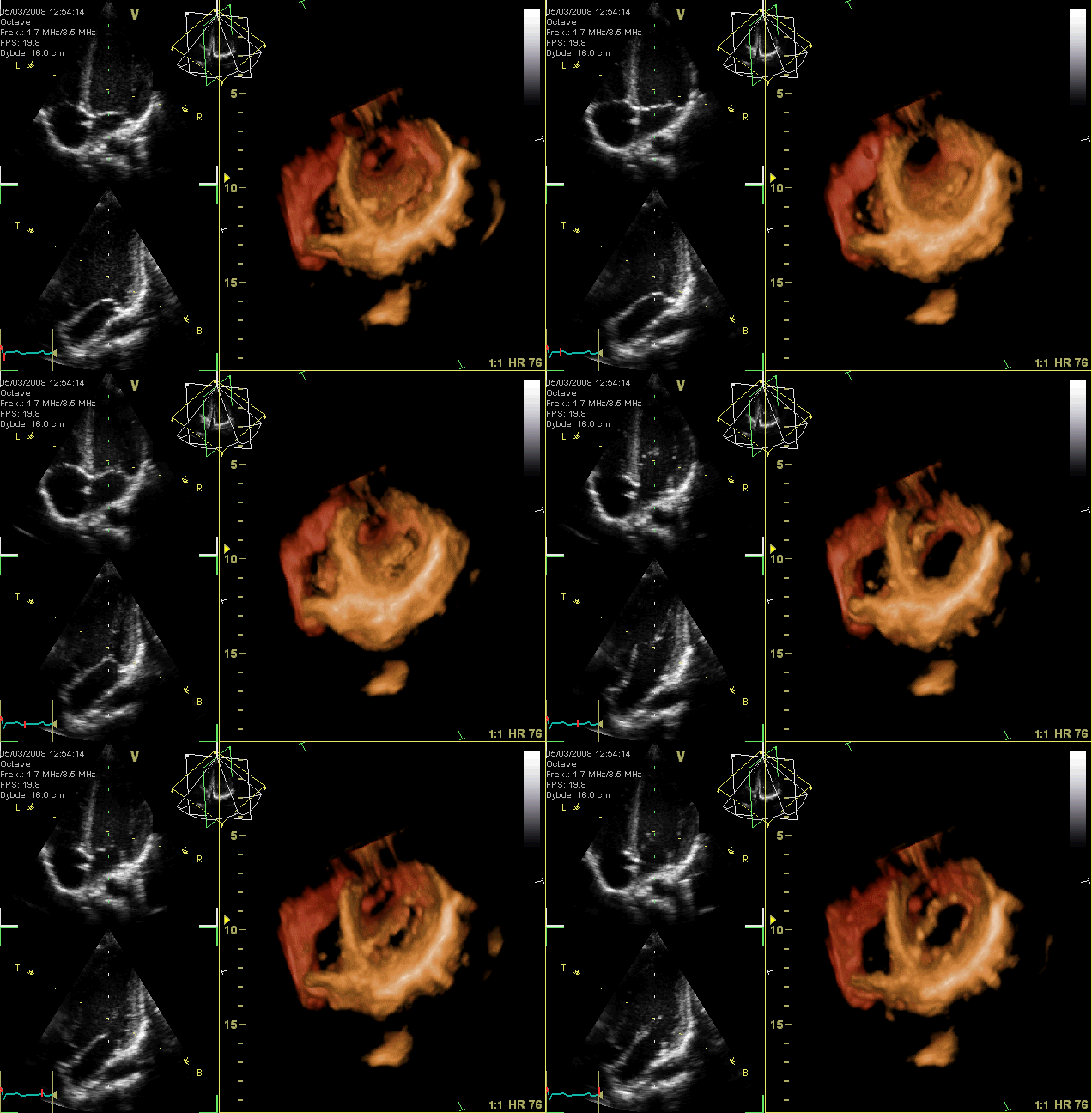
| An echocardiogram of the heart |
After years of being treated for persistent asthma, Dr. Smith (name changed) found his usual mix of inhalers and pills was no longer working. Unable to comfortably sleep at night and finding he couldn't hustle as quickly up and down his clinic's hallways, he decided it was time to see the Disease Management Care Blog. After a quick look and a listen to his heart and lungs, the DMCB tapped its heuristics and made a shortcut bet that this wasn't asthma. The echocardiogram that was obtained that afternoon proved that it was right: Dr. Smith had heart failure.
Heart failure is the leading cause of hospitalizations in the elderly and is a huge cost to the U.S. health care system. Therefore, if docs like the DMCB on an individual basis - or the U.S. on a health care policy basis - could prevent heart failure, that would be a big deal.
"Natriuretic Peptide–Based Screening and Collaborative Care for Heart Failure - The STOP-HF Randomized Trial" that was just reported in JAMA may be a step in that direction.
The DMCB explains.
First off, there is a hormone that is made by a stressed heart (yes, the human heart secretes hormones) called "naturetic peptide" (or NP) that signals the kidneys to excrete more salt and water. "BNP" is one type of naturetic peptide that can be detected using a simple blood test.
The STOP-HF trial set out to examine whether BNP levels could identify otherwise well-appearing persons with stressed hearts who were at future risk for the development of clinically evident heart failure. By catching these persons early and getting them into treatment, the hope was that these patients wouldn't turn out like Dr. Smith.
39 practices in the catchment area of Dublin Ireland's St Vincent's Hospital referred patients who were older than 40 years and had one of the following cardiovascular risk factors: high blood pressure, high cholesterol, an obese body mass index, documented (by an angiogram or a known heart attack) coronary artery disease, history of stroke, peripheral vascular disease, diabetes, arrythmia or heart valve disease. Persons with known heart failure were excluded from the study.
After entry into the study, patients had a BNP level drawn and were then referred to either a "control" (observation only) group or to an intervention group.
In the intervention group, patients with an elevated BNP level of 50 pg/ml or more were referred to a cardiology service and had a cardiac function study using echocardiography. In addition, any of the cardiovascular risk factors were aggressively managed with medications and a specialist nurse-coach.
In the control group, physicians and patient were not told about the BNP level and were cared for on a routine basis. Patients were not referred for any cardiology care unless another reason supervened.
1374 patients were randomized, 697 in the intervention groups and 677 in the control group. High blood pressure was the most prevalent risk factor and most patients had two risk factors. 263 (38%) and 235 (35%), in the two groups respectively, had BNP levels greater than 50 pg/ml. Average follow-up was 4.2 years and all patients eventually had an echocardiogram to assess their heart function
During follow-up, 8.9% of the control group patients and 5.3% of the intervention patients developed heart failure as determined by echocardiography. That difference was statistically significant and was due to a higher level of treatment with drugs that help control risk factors and prevent heart failure. When the DMCB uses a number needed to treat analysis, the works out to 28 patients needing to be screened and treated for an elevated BNP to avoid one case of heart failure. That's not bad, even if you compare it to aspirin and heart attacks. There were also fewer emergency room visits and hospitalizations in the intervention group.
The DMCB's take:
1. This is classic population health management: This study was not only about using BNP to find patients at risk for heart failure, it was about relying on nurse coaches to manage the underlying clinical drivers, such as high blood pressure or underlying coronary artery disease. If the DMCB suggests a better title for this article would have been "Population Health Management to Screen and Treat Patients with Elevated BNP at Risk for Heart Failure."
2. An appealing value proposition with a return on investment: Given a NNT of 28 and the future costs of heart failure, combined with statistically significant reductions in emergency room use and hospitalizations, the DMCB expects population health management service providers as well as medical homes to use BNP and non-physicians to screen and treat patients to prevent heart failure.
3. Still imperfect: Despite aggressive management by a specialized team, 5% of patients in the intervention groups went on to develop disease. We have a ways to go.
Image from Wikipedia