Leaderboard
728x15
Showing posts with label Medical Home. Show all posts

A Watershed Year: What 2015 Holds for the Patient Centered Medical Home (PCMH)

The savvy Jeff Levin-Scherz, who blogs over at Managing Healthcare Costs has responded to the Disease Management Care Blog's snarky "Prattling Pinheads of Pessimism" post on the topic of the Patient Centered Medical Home (PCMH). 

He's not a nattering nabob of negativity or a prattling pessimistic pinhead, says he.  He'd like to be thought of as a skeptic seeking substantiation.   The DMCB wholeheartedly approves of the agreeable alliterative appellation.

2015 may well turn out to be the watershed decision year for the PCMH:

If there's no published peer-reviewed proof that it reduces health care costs, nabobs, pinheads, skeptics and policymakers will need to decide if no evidence of an impact on costs is the same as evidence of no impact on costs.

If the answer is no, THEN we'll then have to decide if the traditional "X causes Y" mathematical approaches to derive proof (such as a comparison of averages using standard power calculations and/or impact on expected or observeed trend) are equal to the task in a very "statistically noisy" environment involving complicated human beings.

If that answer is no, THEN we'll have to decide if reasonable and informed assessments of potential cost reductions, used by countless other businesses every day in other sectors of the economy, are good enough,

If that answer is no, THEN we'll have to decide if there is face value to the PCMH. This involves a contrast of any patient benefit versus its incremental cost.  If the benefit is worth the cost.....

THEN we may have to decide if consumers are willing to pay for it, or if health care costs will need to be cut elsewhere to pay for it.

Stay tuned!


The Office Manager: A Member of the Patient Centered Medical Home Team You Never Heard Of

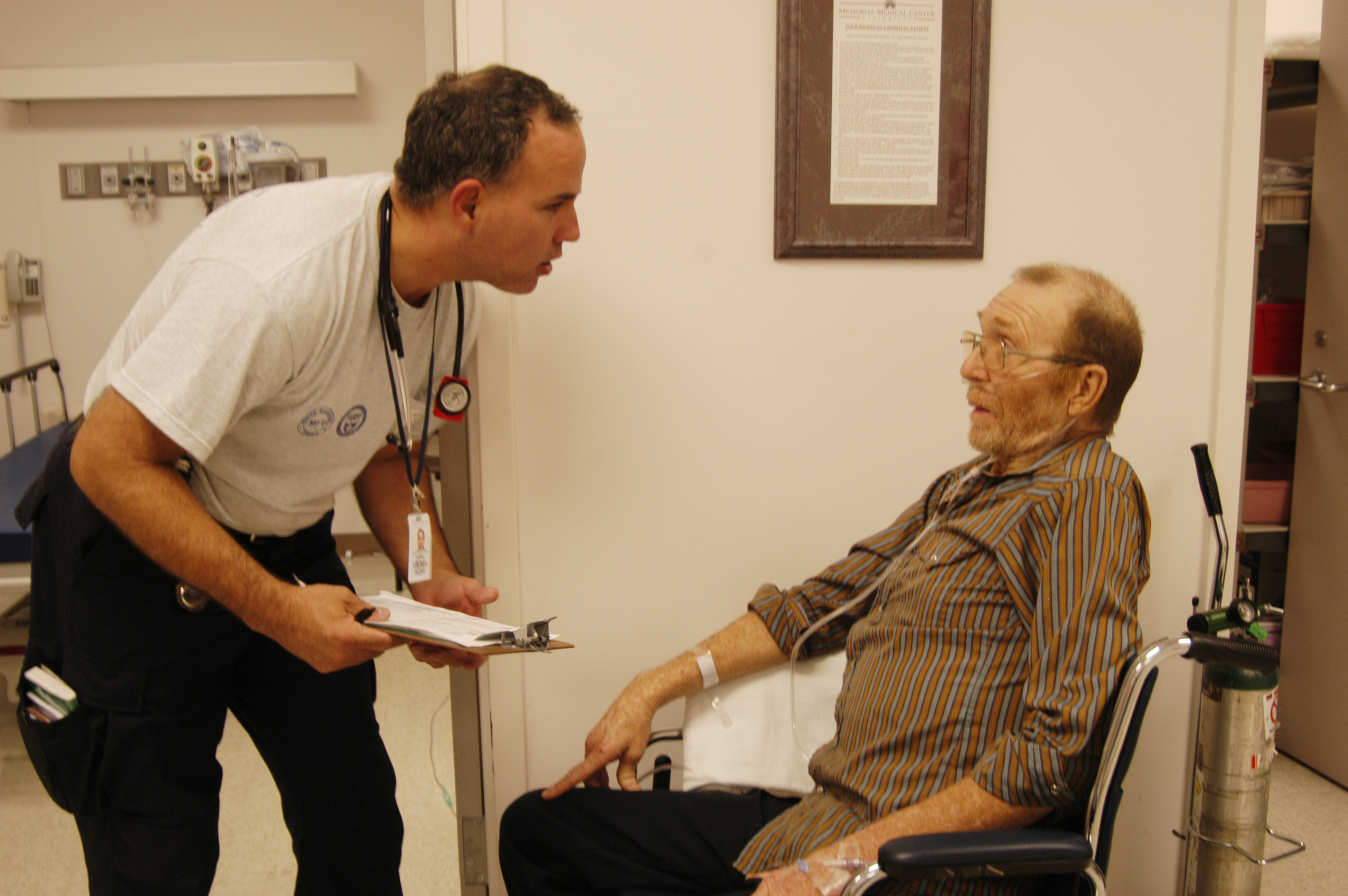
Which one is the practice manager?
Ask the average primary health care policy wonk about the make-up of the Patient Centered Medical Home team and you're likely to get an elevator speech that includes some or all of the key words "pharmacists,"" social workers," "nurse care managers," "nurse practitioners," "physician assistants," "dieticians," "health educators," "respiratory therapists," "psychologists" or "navigators." 

If that's all you hear, tell that wonk they only know part of the story.

That's what the Disease Management Care Blog discovered when it was preparing for its talk at the upcoming CME Start Ratings Master Class Conference that will be held Dec 9-10 in Fort Lauderdale.

It turns out that every primary care office ultimately has one person charged with making sure that the office "workflows" are running smoothly.  When patients register, use the waiting room, have their vital signs and medications reviewed, are asked about pain, are prompted to share other concerns, are moved to the examining room and subsequently get checked out with a follow-up appointments or referrals, there is a maestro in the background charged with making sure the trains run on time.

Meet the office practice manager, the hidden part of the health care team who you never heard of.

In case you think they don't matter, think again.  They have their own trade association and are making their opinions known when it comes to health reform. If a health insurer or practice association needs the primary care clinic to implement a "medical home," you can be sure that it will be up to the practice manager to make it happen.  You ignore that person at your care-coordination peril.

The message for insurers, delivery systems and population health service providers is that physician buy-in is very necessary, but may not be sufficient.  After the doc says OK, medical home advocates would be well advised to find the practice manager and work closely with that individual.

Being Bullish on the Patient Centered Medical Home, Despite What the Annals of Internal Medicine Has To Say


The Disease Management Care Blog recently received a curious email from the Patient Centered Primary Care Collaborative.  As readers may recall, this is the Washington DC-based coalition that advocates on behalf of the Patient Centered Medical Home(PCMH). 

The content of that rather defensive communication can be found here.

What provoked this? The premier internal medicine specialty journal, the Annals of Internal Medicine, published a comprehensive review of the peer-reviewed literature on the PCMH, and its authors skeptically concluded:

The PCMH holds promise for improving the experiences of patients and staff and potentially for improving care processes, but current evidence is insufficient to determine effects on clinical and most economic outcomes

Ouch. No "economic outcomes" means that there is no proof that the PCMH saves money.

Unlike the PCPCC membership, regular DMCB readers aren't surprised.  For example, the DMCB pointed out months ago that the U.S. government's Agency for Healthcare Research and Quality ("AHRQ") had concluded the same thing.  Countless other DMCB posts on the medical home have pointed out that there were problems with the published PCMH literature (for example, here and here).

Thanks to a past Congressional Budget Office report, the DMCB feels the PCPCC pain. It also knows that a) finding statistically significant cost savings in health insurance data bases are notoriously difficult, b) successful medical home initiatives that are outside the academisphere are the least likely to be reported it in the peer-reviewed literature, c) "savings" isn't the only measure of patient value and d) journals like the Annals of Internal Medicine are being sidelined by innovators who are more astute judges of what works for their patients.

What's changed for the medical home and the PCPCC after this unpleasant dust-up?  Ultimately nothing. Pairing nurses and physicians in team-based care, whether it's done remote telephonic "disease management" style or in the clinic "medical home" style is ultimately a good idea with obvious face validity. The Annals' problem is that we don't have pristine scientific methodologies that can identify, capture and measure the benefit.

The good news is that the science is getting better. Until it catches up, the population health and disease management service providers will remain in business and the medical home will continue to have a bright future.

Health Care Cost Insights and Capitation for the Patient Centered Medical Home (PCMH)

The Population Health Blog finally caught up with the Oct 22/29 "Price, Cost and Competition" issue of JAMA

One of the more interesting articles was a Viewpoint editorial on the Patient Centered Medical Home (PCMH). After tut-tuting fee-for-service payment as antithetical to meaningful payment reform, the author admits what the PHB has been saying all along: a global payment that covers all the medical, coordinating as well as non-physician services of the PCMH is tantamount to old fashioned "capitation." As we learned in the 1990s, capitation's unintended consequences are a) signing up too many patients, b) limiting access to primary care and c) over-referring to specialists.  To counter that, the editorial's author suggests the PCMH movement seeks "accountability." 

We'll see about that.

In the meantime, some other interesting articles:

Are "for-profit" hospitals evil?  Not necessarily.....

237 hospitals that converted from not-for-profit to for-profit anytime between 2003 and 2010 were compared to 631 hospitals that had not converted.  Converting hospitals improved their financial margins (practically all were in the red and subsequently became break-even) vs. the comparison group, and did so without increased utilization, restricting access to care, higher death rates or declines in quality for their Medicare patients. Their path to profitability may have been lined by renegotiated commercial insurance contracts, cutting costs or moving non-performing assets off the balance sheet.

Can physician groups become monopolistic? In a word, yes.

Commercial insurance preferred provider organization (PPO) charges for ten types of physician office visits in ten different specialties across 50 states were correlated with a measure of local market dominance dubbed the "Hirschman-Herfindahl Index" (more on that here).  As the HHI index increased, payments also increased, suggesting that as much as additional $3 to $12 in fees for the same services were the result of monopolistic contracting.

Monopolies aside, if docs are in charge vs. the hospitals, can they reduce health care costs?  Also yes.

This study compared average "per-patient expenditures" of physician-owned versus hospital-owned integrated medical groups and independent practice associations in California from 2009 to 2015. Among the 158 groups, 118 were owned by docs; their expenditures were over a thousand dollars less compared to hospital owned groups.  Larger physician groups had higher expenditures than the smaller ones.  More on that in a future post.

Does price transparency help patients chose to spend less?

Over 500,000 insurance plan enrollees had special on-line access to prices for medical services prior to using them.  There were over 250,000 households and of these, approximately 7500 accessed the information. Compared to households that didn't check the information, the price-shoppers seemed to choose cheaper labs (a few dollars per test) and imaging options (about a hundred dollars per test).  In looking at the data, the DMCB suspects some may have also deferred testing by choosing to use them less frequently or not at all.

The Most Interesting Man In the World Teaches the PHB about the Medical Home

The Population Health Blog isn't sure why its Twitter account was targeted by the Dos Equis ads about the exploits of "the world's most interesting man." Tweets on how "His grandmother uses his family recipes!" and "Fish fight for his bait!" tempted the PHB succumb to Twitter followership.

Which naturally prompted the debonair PHB to ponder the exploits of the Patient Centered Medical Home (PCMH).

To wit:

The White House wants to throw the bus under the PCMH.

Health insurers like it when the PCMH loses money.

The PCMH sues malpractice attorneys.

Ezekiel Emanuel wants be enrolled in a PCMH after he turns 75.

Biker pediatricians have tattoos that say "PCMH."

When they encounter a PCMH, actuaries stop counting.

PCMH jargon about smart device apps has led to the creation of a PMCH jargon app.

"PCMH" is how "ACO" is successfully spelled.

The most interesting man in the world is enrolled in a PCMH

The PHB invites other exploits.

Stay healthy, my friends.

Community Care North Carolina Style Medical Home Saves Money

So, does the medical home "save money?"  A recent publication in Population Health Management about Community Care of North Carolina (CCNC) says "yes." That's important, because CCNC program has had more than its fair share of controversy

You can read more about CCNC here.  According to the Commonwealth Fund, Raleigh pays CCNC's 14 non-profit regional networks $3 per member per month (PMPM) for medical home services for over a million Medicaid and CHIP beneficiaries. In exchange, the 1300 clinics provide preventive care services, 24 hour coverage services, coordinating access to specialty services, care management and quality improvement. To do all that, CCNC uses a "medical home model" with "specialized chronic care programs" staffed by teams of docs, pharmacists and care managers.

The quasi-experimental evaluation published in PHM used "hierarchical modeling" to evaluate the impact of CCNC on two different samples of non-elderly (ages 0 to 64) disabled Medicaid patients who had no other insurance:

Model 1: compared the medical home patients' claims expense within and outside the enrollment periods "after controlling for other covariate values"

Model 2 created matched cohorts of enrolled and non-enrolled patients to compare pre-post differences in insurance claims expense. Matching was based on pre-enrollment pharmacy use, race, age, enrollment duration, clinical risk and behavioral health burdens.  For every enrolled patient, ten non-enrolled comparison patients were selected. 

The study period was January 1 2007 through Sept. 30, 2011.  Any single months of disenrollment were "filled in" if there was enrollment 2 months per and 2 months post. 

Results?

Model 1: This used insurance claims data for over 169,000 patients with an average age of 35 years. 52% were male with a 24% rate of mental illness and an 8% rate of chemical dependency. Compared to the time of not being enrolled in a program, claims expense was statistically significantly $190 per member per month (PMPM) cheaper in the first year; that declined to $64 PMPM cheaper in the last ear of study.  Persons with a higher burden of illness had even greater savings.

Model 2: This studied claims from approximately 102,000 enrolled patients with pretty much the same baseline characteristics in Model 1. Savings achieved statistical significance in the 3rd, 4th and 5th years of study: $81, $73 and $121 PMPM, respectively.

The DMCB's take:

While it can get lost in the sublime minutiae of hierarchical modeling, the DMCB finds the methodology and the numbers to be credible.  It has used the same Model 2 style of matching in its own studies. Since a pristinely conducted prospective randomized control clinical study is functionally impossible in a state-wide Medicaid program, quasi-experimental study designs like this are a good window into figuring out what happened.

And what happened is that they saved a lot of money. Assuming CCNC was paid $3 PMPM or $36 million per year for a about a million beneficiaries, avoided claims expense appeared to be well north of that.

While CCNC has a lot of moving pieces, the DMCB believes the key success factor was based on identifying the most vulnerable patients and then using nurses to intervene on the them.

The average caseload per nurse ranges from 150 to 200 patients.  As the Commonwealth Fund summary describes.....

"Case managers... work with primary care providers (“medical homes”) to identify patients who will benefit most from targeted care management interventions, such as patients making repeated ER visits; patients diagnosed with asthma, diabetes, or heart failure; and patients who have two or more chronic conditions (including mental health conditions) with high service use or activity limitations indicating complex care needs. Care managers identify high-risk patients through the CMIS and from case-identification lists provided by the CCNC central office, notifications of admissions provided by hospitals, and physician referrals."

CCNC is to be congratulated for moving from opaque actuarial studies to the harsh glare of peer-reviewed publications.  While some critics may pounce on some of the weaknesses inherent in any retrospective analysis of subpopulations, the observations from two "Model 1 and Model 2" vantage points  are sufficiently positive to believe that North Carolina's taxpayers got their money's worth.

The DMCB would point out two caveats:

The disabled Medicaid beneficiary population is a notoriously high utilization group that is a classic example of the return on investment from "low hanging fruit." A little coordination goes a long way in a population with a baseline of high utilization.  The same approach may not work in other populations with different patterns of claims expense.

Unfortunately, this gives us little insight about the potential impact of a similar medical home model in commercially insured populations or among Medicare beneficiaries.  That's doubly true for fee-for-service beneficiaries who are outside of any managed care networks.

CMS Succumbs to Disease Management Style Spin?

If, thanks to the medical home or disease management, you've witnessed the improvements in patients' care, you've also probably been frustrated by those silly skeptics' insistence on validation. But for traditional research designs, statistical significance, valid comparators and publication in obscure scientific journals, the face validity of nurse-led care management for high risk patients could have ushered in a new era in primary care.

Darn those academic-actuary-statistician-weenies! And double darn CMS for falling for them and not funding the medical home and disease management!

Which is why Population Health Blog readers may enjoy this bit of peer-review schadenfreude. It appears a recent CMS pronouncement that its own "Partnership for Patients Program" prevented early elective deliveries and reduced readmissions is highly suspect, thanks to "a weak design, a lack of valid metrics, and a lack of external peer review for its evaluation." 

Yikes.

It appears the amateurs at CMS used a pre-post design, selected start and stop evaluation points to gin up the outcomes, relied on imperfect administrative data and never bothered with having its outcomes validated by independent review. As a result, we really don't know if the billion of dollars that went into PPP did any good at all.

The PHB appreciates the point. Scientific discipline and peer review go a long way making sure that consumers are getting their money's worth. Now that CMS has gone from an agnostic payer to the centerpiece of health reform, there's a huge risk that its bureaucrats will succumb to shortcuts and spin.

Taxpayers deserve better.  And so do patients.

Image from Wikipedia

The Philosopher King Approach to Health Care Payment Reform: Commissions, Councils, Task Forces, Panels and Lawyers

Paying for it is a whole new kettle....
Now that the U.S. Supremes have confirmed the Affordable Care Act as the law of the land, the Next Big Step - as the Disease Management Care Blog predicted - is the move from insurance reform to payment reform. While it's politically easy to broaden entitlements to cover everyone, figuring out how to pay for it is a whole new kettle of financing fish.

In response, a who's who of Obamacaregineers are stepping up with their Phase II recommendations for payment reform.  While you ponder whether the DMCB summary below is enough or whether you need to follow the link for more detail, ask yourself what's missing......

1. Let public and private payers combine forces to "negotiate" payment rates that aim for global spending targets at a regional level.  Embedded costs for research, training and uncompensated care would be carved out and preserved separately.

 2. Use bundled payment methods for episodes of care that span rehab and post-discharge care, starting out with cardiology and orthopedics. Aim to make this payment approach the rule for 75% of Medicare's budget within 10 years.

3. Commoditize medical devices, lab tests and radiology services by forcing suppliers to competitively bid for Medicare's business.

4. Encourage tiered insurance products, where consumers can pick progressively lower premiums in exchange for higher out of pocket costs.

5. Leverage state exchanges to ratchet down costs on pain of being "delisted" by forcing them to compete on cost and quality.

6. Simplify administrative costs by establishing a single format for all paper and electronic forms. The latter is the default unless the consumer opts for paper.

7. Make the pricing for medical services public and outlaw gag clauses.

8. Allow non-physicians to take advantage of scope-of-practice  laws to practice medicine autonomously.

9. Close the provider self-referral loopholes that allow docs to provide "in house ancillary services," unless its under a global cap.

10 Start all the above with the Federal Employees Health Benefits Program (FEHBP).

11. Use the "safe harbor" of practice guidelines to protect docs against allegations of medical malpractice.

What's missing is the usual emphasis on primary care and, in particular, the patient centered medical home.  While it could be argued that global targets and bundled payment methodologies will drive the inclusion of higher value/lower cost non-specialists, the DMCB is shocked, shocked that the experts and editors missed usual nod to primary care.

The DMCB will also point out that the proposal is rich in expert councils (to set spending targets), programs (as in Medicare Acute Care Episode to define the bundling), panels (for the competitive bidding and guidelines) task forces (for the administrative simplification), commissioners (to assure transparency) and, last but not least lawyers (expanding Stark to ban self-referral).  Plato, the champion of Philosopher Kings, would be proud. 

In the meantime, Ayn Rand is rolling in her grave.

Image from Wikipedia

AHRQ Says the Patient Centered Medical Home (PCMH) Does Not Lower Health Care Costs. Here's 5 Reasons To Not Believe Them

While you read the following, keep in mind:

1. Using traditional research to detect a "statistically significant" decrease in insurance claims expense is notoriously difficult.

2. There's scientific statistical proof and then there is a reasonable business assurance.  The latter may be enough for business-minded health insurers.

3. The conclusion is based on published research.  Unpublished "in house" data have convinced many insurers to include the medical home in their covered benefit.  They know something AHRQ doesn't.

4. While medical homes alone may be insufficient to save money, that doesn't mean that medical homes that are part of a package of interventions (value-based purchasing, P4P, vendor-based population health management or an ACO) are unnecessary.

5. While there is no evidence of savings, there is also no consistent evidence of increased cost. That means the quality associated with the medical home represents high value.

That being said, the U.S. Agency for Healthcare Research and Quality (AHRQ) Evidence Report Technology Assessment on the Patient Centered Medical Home says:

"Based on a combination of good- and fair-quality studies, there is a low strength of evidence that PCMH implementation may lead to lower utilization (inpatient and emergency department) for some subgroups of patients, but this effect was not uniform. Moreover, total costs were not lowered in the reviewed studies.

However, three observational studies specifically designed to test PCMH do report lower inpatient and emergency department utilization among patients in the PCMH program. However, total costs were not statistically different for PCMH and non-PCMH patients in the three studies. None of the clinical trials of functional PCMH interventions had statistically significant differences between intervention and control arms for inpatient or emergency department utilization.

No studies reported statistically significant cost savings among PCMH patients. In fact, when taking into account program costs, two studies, one good-quality trial and one fair-quality observational study, reported greater total costs among intervention patients."

 Image from Wikipedia

Inconvenient Facts Get In the Way: Blue Cross Blue Shield of Michigan's Patient Centered Medical Home (PCMH) Program Savings Claims Are Not Based on Statistical Significance

Welcome to your medical home!
The Patient Centered Primary Care Collaborative announced:

"Blue Cross Blue Shield of Michigan saved an estimated $155 million in preventative claim costs over the first three years of its Patient Centered Medical Home program, based on calculations made from an analysis published this month in the Health Services Research Journal".

According to the Blue Cross Blue Shield of Michigan web site:

"'Blue Cross’ Patient-Centered Medical Home is transforming health care delivery, saving millions of dollars and improving lives,' said Daniel J. Loepp, president and CEO of Blue Cross Blue Shield of Michigan."

HIT Consultant's insightful coverage of healthcare innovation said:

"According to the analysis, 'Partial and Incremental PCMH Practice Transformation: Implications for Quality and Costs,' researchers found that its Patient Centered Medical Home model, when fully implemented, resulted in:
  • 3.5 percent higher quality measure
  • 5.1 percent higher preventive care measure
  • $26.37 lower per member per month medical cost for adults"
"Whoa!" said the Disease Management Care Blog. Since $155 million from $300 per member per year reductions in claims expense is some very serious savings that, until now, has never been reported for the PCMH, it naturally looked at the original research.

What did the sleuthful  DMCB find?

Contrary to flattering press releases quoted above, the Blue Cross Blue Shield of Michigan did NOT conclusively save any money. The observed savings of $26.37 PMPM failed to achieve statistical significance and could have been the result of normal random variation that naturally occurs in the flow of claims payments.

The DMCB explains.

Physicians participating in the Blue Cross Blue Shield of Michigan Physician Group Incentive Program (PGIP) were in two payment tiers: 1) "partial reimbursement" for self-reported PCMH implementation and 2) 10% "fee enhancements" for self-reported "significant" PCMH implementation. As the DMCB understands it, 65% of all the PCPs in Michigan participated in the self-reporting in both June 2009 and June 2010. These docs cared for approximately 1.5 million Blue Cross Blue Shield patients.

During the course of self reporting, docs had to attest to the presence of PCMH capabilities, including use of a registry, obtaining performance measures, care management capabilities, patient self-management support, 24-7 patient access, test tracking and follow-up, e-prescribing, a web portal, specialty referral guidelines, preventive services and linkages to community services. Various domains within each of the capabilities were assigned a weight that was rolled into an overall score: the higher the score, the "more" the PCMH.

The researchers examined the claims history for the patients cared for at a total of 1,787 practices that were in the PGIP, had a minimum number of BCBS enrollees, had no missing data and were not quality outliers. Their median enrollment was 303 members and a mean per member per month (PMPM) claims expense of $311.

Compared to practices that never achieved any PCMH capabilities, the PMPM for practices that attained "full" (i.e. significant) PCMH implementation was, compared to practices that never achieved any PCMH implementation, $26.37 lower for adults.

The p value for the $26.37 quoted on page 15 of the manuscript equaled 0.0529.

Because the p value is greater than .05, it doesn't reject the null hypothesis and fails to meet the conventionally accepted threshold among health services researchers that the difference is real and not the result of randomness.

For children, the PCMH was associated with a $7.45 increase in costs. That likewise failed to achieve statistical significance (p = .096).

No where in the manuscript do the authors claim there were "155 million" in savings.  The DMCB suspects the authors of the press releases extrapolated the statistically non-significant figure of $26.37 to a population count.  Garbage in, garbage out.

The DMCB take:

1. Its highly likely that BCBS of Michigan has additional actuarial figures that support the cost effectiveness of the PCMH.  BCBS of Michigan also put its numbers into the public domain.  It's also likely that that PGIP and the PCMH represents an important opportunity to build and collaborate with a vibrant primary care network, which ultimately transcends any monetary savings. Kudos at many levels to BCBS of Michigan, says the DMCB, despite an over-generous misinterpretation of published health services research.

2. While the DMCB did not report on the quality measures that were concurrently reported in this HSR study, it also appears statistically significant quality of care gains were made.  That means there were increases in quality with no increase in cost.  That's good news and, thinks the DMCB, a more honest appraisal of the outcomes.

3. Unfortunately, BCBS of Michigan did not report the "net savings."  As noted above, providers were paid to implement the PCMH, which represents an additional and "hidden" PCMH cost.  Assuming the $155 million in reduced claims expense is real, it would have to be contrasted with the millions in additional fees that were paid to the doctors.


"Pro" and "Con" Jargon for Your PCMH Debating Pleasure

PCMH supporters in search of convincing jargon to populate their meeting presentations, webinars and white papers need to look no further than a recently published JAMA editorial by Robert Reid and Eric Larson on the "Financial Implications of the Patient Centered Medical Home."

Written to compliment a JAMA research paper on the same topic (reviewed by your Disease Management Care Blog here), this short manuscript uses fawning policy-speak that puts the creation of the PCMH on the same level as the discovery of penicillin and the defeat of managed care.

Knowing that many DMCB readers likewise share in the unquestioning admiration for the PCMH, the DMCB is pleased to offer this compact summary of the JAMA article using handy rhetoric that can be deployed at any time against a skeptical actuary, a cost-cutting Republican or a hell-no-we-won't-pay insurance executive.  Simply shake vigorously and spray in the direction of that offending nuisance:   

Primary care in the United States is in disrepair. Other countries that have primary care systems based on patient centeredness of the PCMH benefit from higher quality and lower costs. Promising studies of the PCMH have all but proven that it is associated with downstream savings, which should be enough to justify payment. What's more, the concept has been endorsed by the World Health organization and the Institute of Medicine. The PCMH is also at the forefront of value vs. volume payment reform, investing in better health for the nation, overcoming disparities and increasing access to care for vulnerable and underserved populations. That's why Federal government action that builds on the promise of the Affordable Care Act in the form of 1) additional demonstrations, 2) Medicare reimbursement for care coordination and 3) regulation of ACOs to assure incorporation of the PCMH is necessary.

And in the interest of fairness for all the PCMH skeptics, here's what you can say back:

Primary care is simply struggling to demonstrate value to health care consumers who, when given a choice, prefer specialists' care. Other countries' culture, governance and socioeconomics could account for much of their success with primary care and that's why there is no guarantee that simply importing it to the U.S. will prove to be a health care panacea. While there have been multiple PCMH studies, not one (in contrast to other population-based interventions) has demonstrated statistically significant savings, meaning that any observed savings could have been the result of random variation. While endorsement by WHO and the IOM are impressive, Americans have a prickly unwillingness to take large institutions' word for it and this is unlikely to have any impact on patient buy-in. Too many patients and doctors know that the terms "Federal" and "action" are not only contradictory, they confer a faith in government (as well as the ACA) that is not shared by a significant percentage of the very people that are supposed to benefit from the PCMH. Last but not least, looming "Taxmeggedon" makes it improbable that our politicians will embrace the notion of investing today's hard dollars for tomorrow's ephemeral savings. Until multiple studies in multiple settings consistently show savings vs. a valid comparator, the PCMH should remain a topic of research.

Surprise, Surprise: The Patient Centered Medical Home Costs Money!

Alt for Norge!
The Disease Management Care Blog is decamping to Norway for a meet-the-family and see-the-sights vacation.  The good news is that Europe is 8 hours ahead, which means the DMCB will know about the Supreme's Thursday decision 8 hours before anyone else.  The bad news is that in the coming days, its posts will become infrequent at best.

In the meantime, check out this just-published JAMA article on the PCMH. 669 primary care centers participated in a Harris survey commissioned by the Commonwealth Fund.  While the "Safety Net Medical Home Scale" was not based on the NCQA, it inquired about the familiar care domains.  The 0 to 100 scale was correlated with financial data from the Uniform Data System reports that reflected the clinics' operating costs.

Unsurprisingly, the authors found that as the medical home score increased, so did the operating costs. Moving from 60 points to 70 points increased the cost per patient per month by $2.26.  While the authors calculated that translated into more than half a million dollars of additional expense for the average clinic, the DMCB notes that kind of expense for an average physician panel of 1500 patients means more than $40,000 per year.

Readers familiar with the cost of disease and population health management will find that $2.26 PMPM statistic very significant because that's in the range of what is charged by many vendors.  What's more, the vendors' charges include a profit margin which was not necessarily included in the clinic's study data.

Conclusions?

The PCMH is not necessarily "cheaper" than outsourced care management.

While the PCMH may (statistically significant proof remains elusive) "save money," it appears they have the same challenge faced by the disease management industry in the early days: savings net of fees doesn't necessarily equal profit or a financial gain for the health insurer or consumer.

It Costs How Much to Launch a Patient Centered Medical Home?

HOW much for the PCMH?!*
According to Drs. Gill and Bagley, writing in the Annals of Family Medicine, the costs of transforming a primary care practice to a Patient Centered Medical Home should be generously borne by "payers."

While wishful thinking about payers' deep pockets is not new, the article has some eye-opening data (with Disease Management Care Blog provided links) on just how much some or all of the elements of a PCMH cost:

a) $1850 per month per practice or $17,000 per physician,

b) $5,600 start-up then $2,200 per year related to the costs of reporting outcomes,

c) $117,000 per physician per year, and

d) up to approximately $15,000 per practice per year for a management facilitator

No wonder the DMCB's friends in academia want someone else to pay for it.

In the meantime, companies like this continue to offer a different business model. Instead of rebuilding and equipping an entire primary care practice for a croup-to-guts "transformation," population health (definition here) service providers focus on those patients who are at highest risk and provide a modular combination of in as well as outsourced services. While there is no head-to-head cost comparison of PH vs. PCMH, it would appear that the per patient approach of PH has a competitive pricing advantage.

Stocking up for
allergy season
And speaking of outsourced services, the DMCB joins its other colleagues in looking forward to EHR's "meaningful use" criteria go from being meaningless to being truly meaningful.

For an under-recognized example of just how meaningful things will become, check out this interesting blog posting that describes the use of cloud-based EHR-data to follow U.S. allergy statistics.

While the information is interesting on its own merits, think how these data could be used by savvy providers to match allergy "market demand" by "stocking" a "just-in-time" "inventory" of allergy-care services such as patient reminder campaigns (for those with allergy-provoked asthma, "be sure to use your peak flow meter!") extra condition-specific appointments ("your provider with allergy expertise can see you this morning!"), treatments slots (nebulizers and immunotherapy ready to go) and medications (OTCs and prescription meds for the in-house pharmacy).


*Image from Wikipedia

The Cost-Saving Elevator-Pitch for the Patient Centered Medical Home

Ready, set, elevator, go!
Over the last year, several colleagues have asked the Population Health Blog to compactly summarize the economic return for the Patient Centered Medical Home (PCMH).

Here's the PHB's elevator speech: 

The PCMH comes down to two distinct - and separate - propositions:

1. "Reduce avoidable costs" by only applying the team-based care management and coordination to persons with all three of the following: a) chronic illness who b) are at high risk for future claims and c) are amenable to change.*  All three must be present. This cohort typically represents a small, but "high return potential" fraction of a population.
 
The temptation is to blanket all patients with medical home resources, which increases program as well as claims costs and does little to bend the total cost curve.  The "disease management" industry learned about "care creep" the hard way.

2. "Increase value" by enhancing quality and/or the experience of care with a modest - and relatively affordable - increases in costs. The relative increase in quality/experience is greater than the corresponding increase in program and claims costs, and represents a good deal for the health care dollar.

The temptation is to believe that quality/experience improvements lead to lower costs.  Once again, the "disease management" industry learned about this the hard way. 

* By the way, if the elevator ride is long, the PHB recommends pointing out that 1) predictive modeling/risk stratification can find the high risk persons and that 2) "change" includes modifying patient behaviors.

Image from Wikipedia

The Patient Centered Medical Home PCMH Gets On Base with Increased Quality in the Real World

Getting to first base
Advocates for the Patient Centered Medical Home will probably like what they see in the lead research article in the June 3 Annals of Internal Medicine.

The Population Health Blog likes it too.  But first, let's look at the study itself.

The Taconic Independent Practice Association participated in a multi-commercial insurer medical home program.  For each patient enrolled in an NCQA Level 3 primary care home, the IPA was offered $2 to $10 per patient per month. 

Since not all of the 675 IPA practices created medical homes in the 2008-2010 time frame, researchers were able to compare the quality of care for the approximately 27,000 patients attributed to the medical homes versus the approximately 64,000 patients attributed to usual care settings.  While they were at it, they also evaluated the quality impact of having an electronic health record (all medical home practices had one, but not all users of electronic health records were medical homes) vs. having a paper record. Quality was determined by examining a subset of NCQA-based measures of recommended routine screening tests and care of persons with diabetes, asthma and (for children) pharyngitis.

While the impact of being in a medical home was not a home run, it definitely got on base.

Over the three years of the study, the medical home practices' measures diverged from the other two groups by an average of a 7% vs. paper and 6% vs. EHR.  While none of the practices hit 100%, and not all of the differences were statistically significant, if an EHR-based clinic was able to hit (for example) a "72%" quality measure, the medical home was"79%" (mammogram screening). 

As one more gauge of its impact, as time went on, the spread of the data grew over time as medical homes outpaced the usual care practices.

The authors correctly point out that the study was observational and that there could be hidden factors other than the presence or absence of a medical home that could be biasing the data.  While the authors did everything they could to statistically "neutralize" the impact of unequally distributed patient or practice factors, the study process is not perfect.

This was also in a commercial insurance setting.  We don't know if Medicare patients would gain the same benefit.

The PHB will also point out that the NCQA's one-size-fits-all measures are intermediate in nature and are imperfectly tied to long term outcomes.  They also fail to account for patient preferences.

On the other hand, the PHB likes this because it was a huge "real world" study involving hundreds of clinical practices taking care of tens of thousands of patients over three years. It helps the PHB put things in perspective by showing that the team-based care management of the medical home can have a discernible impact on quality.

Unfortunately, there is nothing on the cost of care. The PCMH is still struggling to prove that it "saves" money; the PHB says health care consumers will get what they pay for and - aside from a selected high-risk subpopulation - the medical home offers high value at a reasonable additional cost.  The commercial insurers got their money's worth from the Taconic IPA.

While the authors don't specifically call it out, there doesn't appear to have been a large impact by the EHR on the quality of care in the real world.  Compared to practices with paper records, the impact of the EHR seemed to be scant.

Care Management FTE: Check. Medical Home Training: Check. But Actually Use It In Patient Care? That's Another Story....

Months ago, the caffeine-addled Disease Management Care Blog reviewed with the spouse how to pre-set the kitchen coffee brewer for a pot of fresh coffee for the next morning. After listening politely to its earnest instructions, the DMCB spouse rarely set up the brewer.

Which is why the DMCB wasn't surprised by an Iowa Chronic Care Consortium (ICCC) study of how its newly minted medical home coach trainees were being deployed in the real world. The ICCC is a not-for profit organization that was founded in 2002 and offers a training program that prepares health professionals to be members of a medical home team.
.
The Consortium surveyed 318 graduates from their program. Of that number, there were 164 responses, yielding a 54% response rate. 83% of the respondents were nurses, while the remainder were medical or office assistants, diabetes educators, dietitians, social workers, physicians, pharmacists or administrators.
 
The good news is that care-management caffeine was available. The majority of respondents reported that they were using their skills to coach patients for self management, care coordination, planning visits and supporting registry use.  The majority also found their work professionally rewarding.

The bad news is that these professionals were not being supported for maximum effect:

55% were still "building support for the position."

48% reported that "office work" was given a "higher priority," often due to physician and administrator resistance.

73% reported that their coaching duties were part time and was in addition to their more traditional roles.

Only 8% were involved in office "change management."

Only 11% enjoyed a pay differential that rewarded their coaching skills.

The Consortium's paper concludes - paralleling the DMCB's coffee-making travails - that a good idea accompanied by well-meaning training is not enough to overcome established clinic routines, business roles and local culture.  The authors recommend that provider payments "change," coaching functions be "operationalized," training programs be "advanced," outcomes be "demonstrated" and that roles be "clarified."

While the DMCB ponders coffee change, operations, advances, demonstrations and clarifications, the DMCB has a far more more fundamental concern for the medical home:

With friends like this, the fledgling medical home movement doesn't need any enemies.

If the clinics that took the time and the money to train these individuals are unable to leverage their skills, disappointing outcomes could end up snatching usual care from the jaws of primary care clinic transformation.

The DMCB has three recommendations:

History Repeats: Years ago, established "disease management" companies had to go on record and oppose start-ups that were offering "faux" telephonic patient counseling programs. The medical home and population health management community, including the PCPCC, likewise can't afford to have clinics going to market with diluted medical home programs that deliver empty process instead of hard outcomes.  All health care is local, and much of the buy-in for the medical home will ultimately be won or lost at that level.  Speak up!
 
Buyer Beware: Payers and insurers need to be wise to the possibility that having a trained health coach on staff with credentials is not the same as having a health coach on line with the patients. On site credentialing may be in necessary that includes review of policies, job descriptions, pay scales and staff interviews.

Build or buy: Primary care clinics need to know that when they buy patient counseling services from a population health management vendor, you get full time on a plug and play basis. That may be a better option for a clinic that is not prepared to both train and fully use an on-site health coach.


Population Health Must Include Social Determinants: The Approach in the Patient Centered Medical Home

Diabetes control isn't
their top concern
The Disease Management Care Blog's primary care colleagues are undoubtedly aware of how "social determinants" can undermine the best care planning. So, if you're going to rely on the Patient Centered Medical Home (PCMH) to increase health care quality and reduce costs, ignoring the impact of poverty or health literacy could lead to poor diabetes control, worsening high blood pressure or more hospital readmissions.

Arvin Garg, Brian Jack and Barry Zuckerman have written a JAMA "Viewpoint" that offers five lessons from pediatric medical homes that can mitigate harmful social determinants:

1) Include social determinants (for example, community factors, substance abuse, education, malnutrition or poverty) in the creation of national treatment guidelines.

2) Develop and implement screening programs to identify any social determinants that could impact medical treatment.

3) Colocate community resources that address social determinant in PCMHs.  Examples include housing programs, job training programs or food pantries.

4) Colocate "outside the box" social programs in PCMHs also.  This is an area ripe for piloting or researching innovative interventions

5) Integrate visiting nurse programs with the PCMH.  Think of the visiting nurses as an extension of the medical home.

As readers of the DMCB are aware, not all PCMH's can build the full suite of services that make up a medical home. Since health insurers and care management vendors are partnering with primary care physicians to build medical homes, this approach to incorporating social determinants in their programs is worth a closer look.

Three Models of Primary Care Teaming (TL, CC and ET): An Unexplored Feature of the Medical Home

What defines optimal outpatient primary care "teaming?"

The Disease Management Care Blog just assumed that if it took equal scoops of adaptable physicians, dedicated nurses and supportive culture and baked with a dollop of accountability, "teaming" would just.... happen.

It turns out that what may come out of that clinical practice oven is a lot more complicated than that. 

Which is why medical home advocates should pay attention to this article by George Washington University's Debra Goetz Goldberg and colleagues.  Interested in finding out more about primary care "teaming," they interviewed, reviewed and observed three different Virginia clinics that had embarked on transformative quality improvement programs.

Each clinic came up with a different version of "teaming":

1."Top of License" - nurses interviewed the patients, presented the problems to the docs and then documented the care plan.  They were also responsible for the patient education.  Thanks to using this model, the physicians almost doubled the number of patients they were seeing per day.

2. "Care Coordinator" - nurses focused on helping patients undergoing care "transitions" (typically out of the hospital) and provided self-management and health education to high-risk, high complexity patients.  Interestingly, unsatisfactory reimbursement levels forced the practice to cut back, but they still doubled mammography and blood pressure control rates among persons with diabetes mellitus.

3. "Enhanced Traditional" - the physicians still performed the bulk of the patient care but the researchers observed that the other clinic personnel benefited from increased trust, communication and hand-offs that translated into patient centered care, shared responsibility and heightened volunteerism.  The practice was unable to measure any outcomes.

"Very interesting!" says the DMCB. Authoritative web-sites like this or this and peer-reviewed articles like this refer to "teaming," but fail to precisely define it.  Assuming the three categories described by Goetz-Goldberg (in shorthand, "TL," "CC" and "ET") hold up in future studies, the DMCB looks forward to learning which approach results in the greatest quality or cost-savings.

Coda: As a reader bonus, the authors offer up a definition of "team-based care" that seems to span all three models and can be used for the DMCB readers' quoting pleasure:

"A group of diverse clinicians who participate in and communicate with each other regularly about the care of a defined group or panel of patients."

When It Comes to Nurse Care Managers in Primary Care Settings, It's Not "Build or Buy," It's INVENT or Buy

Seen one of these lately?
The Passenger Pigeon. The Dodo bird.  The primary care clinic nurse.  All are extinct, driven out existence by a changing habitat, competition and over-hunting. Ask the average person when they've last seen these species and you're likely to get the same baffled look that the of DMCB spouse gives when she's asked about her compliant husband who does what he's told.

Yet, the Disease Management Care Blog wasn't aware of the primary care nurses' total absence until a recent conversation with a nurse-colleague who has been helping smaller physician-owned outpatient offices develop local care management programs.  "There are no 'nurses'" she said. "They've all been replaced by office assistants and the docs are trying to get them to do the patient education."

Which makes sense. While articles like this have been lauding health care "teams" made up of physicians and non-physician professionals for years, the fact is that poor reimbursement, the allure of other specialties and lifestyle has long-hollowed out these clinics, often leaving a skeleton crew of part-time medical assistants shuttling patients in and out of the patient rooms.  True, some of the larger health systems with a stake in primary care have kept nurses in the mix, the DMCB thinks that's merely part of a market-preserving loss-leader strategy.

The DMCB looked for medical literature on the topic.  It can't find any surveys or other descriptions on how nurses have largely disappeared from the primary care landscape.  If it's wrong, it wants to hear from its readers.

If true, what are the implications?

  • In large swaths of the primary care landscape, there is no "build or buy."  It's invent or buy.

  • What's more, younger PCP's are even less familiar with the notion of an office-based nurse, let alone partnering with one.  Physician knowledge may have gone extinct too.

  • No wonder the Patient Centered Medical Home hasn't caught on.

  • Why Can't A Single Small Physician Owned Group Enter Into A Shared Savings Contract?

    Even the modest Disease Management Care Blog has to agree that its recent Patient Centered Primary Care Collaborative webinar on supporting care coordination within the medical home was a huge success.  Not only did it get to learn about the impressive work underway at North Shore-Long Island Jewish Health System, but the questions from a record 522 listeners helped the DMCB sharpen its focus.

    Here’s one of the better questions that was emailed after the webinar was concluded:

    What shared savings arrangements can happen on a small scale, for example a 4 doc office?


    The (gently edited) DMCB reply:

    None.

    The month-to month variability in the insurance claims (think 95% confidence intervals) from a small practice makes it practically mathematically impossible to confidently compare an observed dollar amount to a target dollar amount. 

    There are methods that can be applied to diminish the variability (such as censoring “excess” claims and using “risk adjustment”) but, at the end of a fiscal year, a lack of documented savings could be the result of either a) poor care coordination or b) an “underpowered” or mathematically suspect claims analysis.  The skeptical insurer will say it was the former and the screwed docs will say it was the latter.  When that happens, docs lose.

    This is an example of the “law of large numbers” and why the shared risk arrangements in Medicare ACOs have to be based on a minimum of “5000” persons. By having that many observations, the variability is blunted and measures of central tendency hold up in an actuarial basis.

    And then there are the two policy implications.  First of all, shared risk contract involving a relatively small practice is perilously close to the bad old days of capitation and HMOs, vs. the approach of spreading accountability across a large system that is armed with all the requisite care coordination resources  A four person group can’t match that.  Secondly, the insurers have little interest in putting together a payment system that could financially cripple a four person clinical practice, especially if it's primary care.

    The DMCB will examine accountable-like arrangements for a small group practice in a future post.
    Leaderboard