Leaderboard
728x15
Showing posts with label Medicare. Show all posts

Some Medicare Stars Program Updates and the Overlap with Population-Based Care and Disease Management


The Disease Management Care Blog is back from grandly named "Healthcare Education Associates' and the Risk Adjustment Initiative And Society for Education's (RISE)" CMS Star Ratings Master Class conference. The day-long Miami meeting was all about succeeding in the CMS quality-based bonus program called "Stars."

The DMCB listened closely to one speaker.  First are its notes, which are followed by three take-aways.

The notes:

CMS had tried posting Medicare Advantage (MA) Plans' quality measures online, but they were generally ignored by consumers.  That's when CMS decided to change course and use its Demonstration authority to launch the current Stars program. It incents the MA as well as other contracting plans with bonus payments based on a complex weighted formula that includes satisfaction, quality of life and clinical outcomes.  The latter measures are dominated by chronic conditions.

While the measures' minimum payment thresholds are constantly changing, In 2015, 11 MA plans achieved the coveted "5 Star" our of 5 rating, while 127 achieved a respectable rating of 4 or better our of 5. Success appears to be associated with:

1. HMO-type physician network structure,
2. Not for profit status,
3. An enrollment of more than 90,000,
4. An established marketplace presence,
5. A track record of pursuing quality,
6. A track record of physician integration and
7. Advanced informatics including a data dashboard (tracking outcomes), physician level tracking and providing care gap information at the point of care

While the calculation and translation of a particular Stars rating to a particular bonus amount surpasseth the DMCB's understanding, the big picture is impressive.  In 2015, health plans with government contracts spent over $1 billion on their quality programs, while CMS is projected to award $3.1 billion in bonus payments.  This works out to a payment of $281 per beneficiary, or approximately $23 per member per month (PMPM).

The DMCB take-ways:

1. You call it "Stars" but the DMCB calls it population health management: CMS is basically paying its contracted health plans $23 PMPM to develop or outsource programs targeting chronic illness, quality of life and satisfaction, much of which is old fashioned PHM. The DMCB confidently assumes a lot of that $23 PMPM is paying salary and benefits for non-physicians (such as nurses), who are engaging members and doctors using risk stratification and outreach that includes the old fashioned telephone.

2. How generous: Compared to many population health management vendor fees, $23 PMPM seems high. What's more, an industry-wide return on investment of approximately 3:1 ($3.1 billion in payments vs. a cost of $1 billion) is lavish, especially because the DMCB suspects most MA plans were already willing to spend a billion to reduce their claims expense by even more.

3. We've changed our minds: An emerging Medicare "whisper" "fiscal cliff" savings target is $250 billion, which may be partially attained by cutting back on the Stars bonus payments.  While it could be argued that the MA plans have been amply rewarded by the program, the Fed's fickleness remains a considerable business risk, especially for the smaller not-for-profit MA plans 

Dr. Berwick Discovers Toxic Politics Too Late

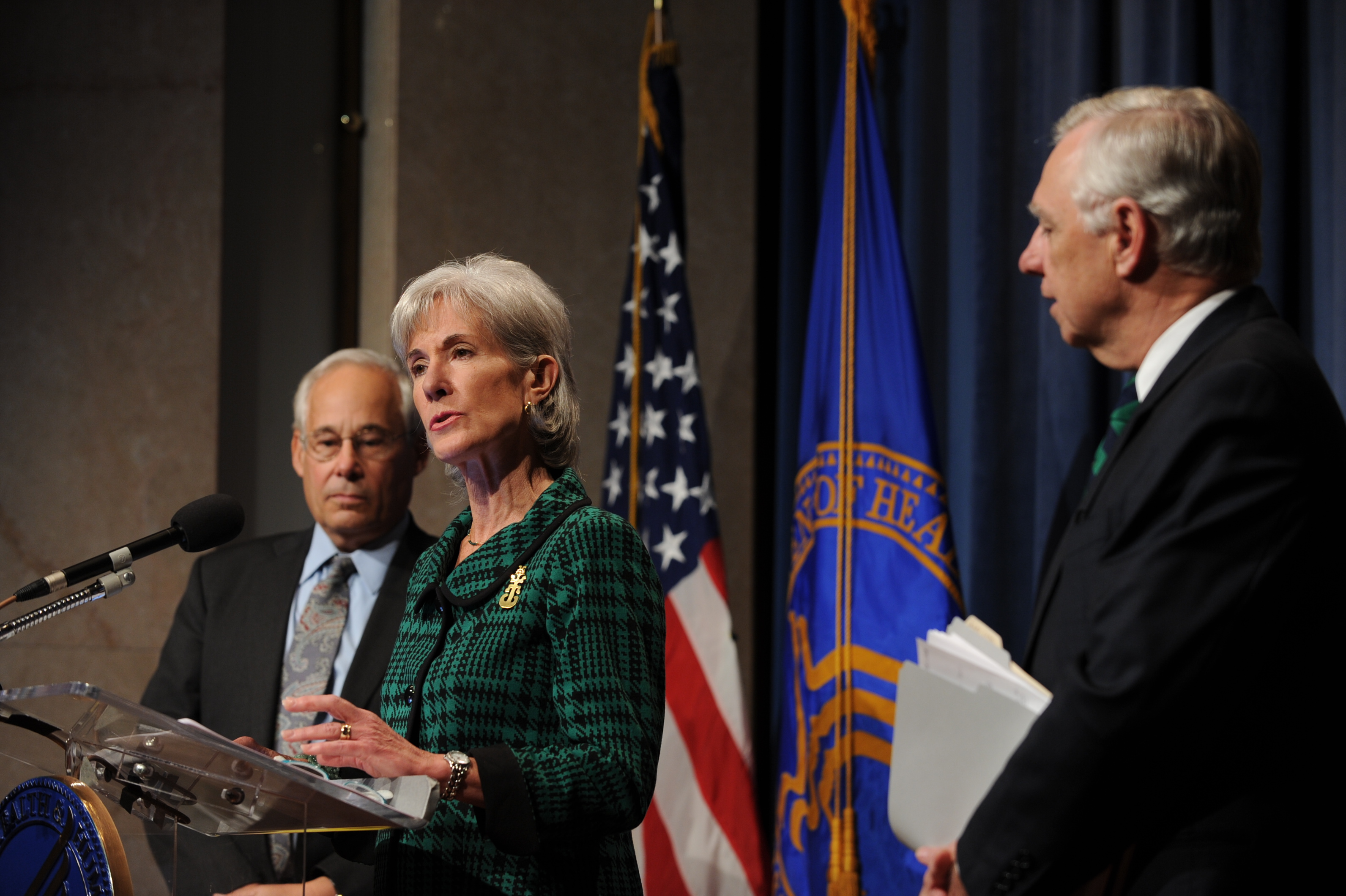
Dr. Berwick listens to Ms. Sebelius
If you're interested in a post-mortem of Dr. Donald Berwick's failure to be confirmed as CMS Administrator, check out his November 13 JAMA article on "The Toxic Politics of Health Care." 

He identifies six causes of our national discontent, which the social media-minded Disease Management Care Blog has boiled down into 140 character or less tweetable summaries:

Money: there are too many entities making too much money to give up on the status quo. "Reducing costs" means cutting into someone's income.

Unorganized majority latent interests: the majority of Americans can't see or translate their interests into effective political action.

The Silence of Professions: Organized medicine has been all about the SGR and tort reform.  They should advocate for health reform.

Suspicion of Science: public trust in science is eroding because of its elitism. That, in turn, feeds into fear of rationing.

Duality of self interest: a lot of people work in the health care industry. Cutting costs will add to U.S. unemployment woes.

Ambivalence about Federalism: it's difficult to develop a coherent national health policy when power is shared with the states.

Ambivalence about the poor: it's difficult to convince the U.S. electorate that disadvantaged populations deserve public support.

For the record, the DMCB openly supported Dr. Berwick's nomination and still feels that he would have ably served his country as CMS Administrator.  That being said, one cause for his undoing was his failure identify these issues before he was forced to leave Administration. 

Docs like Dr. Berwick - and that includes the DMCB - unfortunately think that all they need are the facts to win the day. Not so: they need to address the money, catalyze coalitions, nudge stakeholders, reconcile multiple interests, cut deals and still do what's right.

He was the wrong guy at the wrong time.

More On Why The Prognosis of Accountable Care Organizations (ACOs) Is Guarded and How Should Population Health Management Providers Position Themselves


For a long time, the more than 5000 regular visitors to the Disease Management Care Blog have been aware of the gap separating the promise and reality of Accountable Care Organizations (ACOs). That's why the DMCB salutes the editors of Health Affairs, who have decided it's time to extend the same courtesy to its readership with a well written article by Lawton Burns and Mark Pauly titled "Accountable Care Organizations May Have Difficulty Avoiding The Failures Of Integrated Delivery Networks Of The 1990s."

Remember the 1990's style integrated physician-hospital delivery systems? The DMCB sure does. Like the modern ACOs, these systems' business model were also based on care coordination, incentives alignment, risk bearing, salaried physicians and horizontal and vertical organization.

According to Drs. Burns and Pauly, they flamed out because they paid physicians too much for their practices, lacked adequate information technology, failed to achieve economies of scale, couldn't coordinate care and entered into "piecemeal" capitated contracts.  Last but not least, the typical 1990's style integrated system was never really "integrated" at all: it was made up of multiple provider entities that were simply bolted together.

ACO advocates argue it's going to be really different this time. Information technology is cheaper and more robust, new payment approaches (such as upside risk and bundled payments) are more user friendly, health care administrators are more adept at squeezing costs from the system and purchasers are demanding value over volume.  Toss in patient-centeredness, accountability, transparency, paying zero for physicians' practices and the momentum of federal payment reform, and it's easy to see why ACO-skeptics like the DMCB readers are being viewed as paper-medical record-loving party-pooping pinheads who pine for fee-for-service.

For the record, the DMCB categorically denies being a pinhead. But it and Drs. Burns and Pauly agree there are plenty of reasons to be skeptical.  Among the article's points that resonated with the DMCB are:

1) Most attempts at hospital-physician integration have not ended well, thanks to conflicting goals have not achieved quality, cost, cooperation or integration. Will economics and information technology finally trump culture?  We'll see.

2) Care coordination is no less difficult compared to the 1990s because it not only relies on timely information, but patient self management and nurse coordinators. The parallel flame-out of early versions of disease management also taught us that it is not a panacea for all patients with all chronic conditions being cared for by multiple providers in open networks. It works best when it is targeted at persons with a high burden of disease with readiness to change.

3) Medical homes take years to develop, thanks to years of transformative change management. Just because you're an ACO doesn't mean you're good at it and, what's more, you don't have years.

4) Clinically-based health information technology such as point-of-care decision support, electronic records and computerized physician entry have been inconsistently successful. And that's being generous.

But the authors don't stop there.  They describe four ACO "Achilles heels":

1) If PCPs are truly the linchpin to ACOs' success, it should also be pointed out that they are in short supply. It remains to be seen if they'll welcome a loss of professional autonomy or be willing to accept compensation that remains a fraction of their specialist colleagues;

2) Assuming large integrated systems comprised of a hundred or more physicians are truly able to achieve economies of scale, they won't spontaneously appear.  They take years to develop and mature.  See medical homes above.

3) Utilization of health care services outside an ACO's network not only outside their control but is very expensive, and

4) Maybe ACOs are a "disruptive technology" but the ultimate judge will be consumers.  They have yet to weigh in.

Implications for the population health management (PHM) service providers:

1. As ACOs struggle with their primary care providers and scramble for medical home and large health system-style care coordination services, "outsourced" nurse-based coaching will be very much in demand. But you already know this.

2. Given their national footprint, PHM providers may be in the best position to assist with those out of network or out of state ACO enrollees.  That's a new thought.

3. Keep a Plan B available just in case, and despite your help, ACOs collapse of their own weight.

Three Population Health Management Principles for Reconciling Quality-Based Pay for Performance and the Doctor-Patient Relationship

Writing in the New England Journal, Robert Berenson and Deborah Kay of the Urban Institute say a linchpin of Washington DC's pursuit of quality is a "policy overreach [that] could undermine the quest for higher-value health care."

Yikes.  The Disease Management Care Blog turns to population health management to ponder their unhappiness.

The authors' concern is over Medicare's "Physician Quality Reporting System" or "PQRS."  As the DMCB understands it, PQRS rewards (and penalizes) physicians for outcomes that are calculated from a set of quality "modifiers" that are submitted as part of the Medicare billing statement (an example can be found here).  The amount of money at stake is in the range of 1%-2% of the Medicare reimbursements.

Berensen and Kay point out that while the system has been ramping up over 6 years, 70% of Medicare participating physicians do not submit any modifiers.  In their opinion, that's because:

1) the loss of 1% of any payment is practically meaningless,

2) physicians distrust the metrics and

3) there is a fundamental disconnect between the modifiers and the complex world of clinical practice. 

As examples, radiologists are being dinged for total x-ray exposure while surgeons are being held accountable for pre-op antibiotic administration. While these and other quality measures are important, they fall far short of recognizing what keeps docs up at night, like reading the x-ray correctly and getting a patient through surgery and out of the hospital.

"Hear hear!" says the Disease Management Care Blog.  In the course of a normal day, it is job of doctors to do "doctor stuff" involving one patient at a time. 

But, you ask, isn't that contrary to being accountable to the health of populations? 

The DMCB doesn't think so, because state-of-the-art population health management (PHM) agrees that:

A. Physicians need to be immunized from disruptions their "customer facing" (i.e., the patient) activities.  Otherwise known as the doctor-patient relationship, that's the part of the health care system that relies on the seven or more years of undergraduate and graduate training that turns smart people into exquisitely trained physicians.  Let the doctors be doctors, says the DMCB, and let them worry about their patients.

B. High performing systems - as much as possible - need to be configured around those customer-facing activities, further enabling the doc to focus on the patient who is right here and right now. 

From time to time, PHM might have to intrude.  When it does, the DMCB suggests policymakers recognize that they should proceed:

1) only when it's really important

2) only infrequently and

3) whenever possible, when it reduces physician work by outsourcing (an example in primary care can be found here) those things that don't require the personal involvement of a doc.

It would seem that Medicare's PQRS failed to recognize the fundamentals.

Image fromWikipedia

The Dilemma of Medicare Coverage of "Reasonable and Necessary" Care and Why It's Important


If you get sick, health insurance should cover all the "stuff" necessary to make you better, right?

While that sounds good in principle, Uncle Sam has made it a lot more complicated than that.  As we continue to struggle with health reform, this New England Journal article on "Medicare's Enduring Struggle to Define Reasonable and Necessary Care" is very timely.

According to Drs. Neumann and Chambers, Medicare has always covered medical services that are "reasonable and necessary." As new approaches, drugs and medical technologies have been released, you'd think coverage would be based on an objective analysis of outcomes and cost effectiveness.

You'd be wrong.

Years of differing interpretations, patient advocacy, Congressional meddling, regulatory carve-outs and case law have generated a miasma of bureaucratic complexity that will guarantee the incomes of thousands of lawyers for years to come.

Not that CMS hasn't tried to be reasonable about "reasonable and necessary." According to the article, in 1989 CMS specifically proposed that the words "cost effective" could be used to assess new technology. That proved too controversial. It later tried "least costly alternative language" for coverage of durable medical equipment and Part B medications.  This too was dismantled by the courts when plaintiffs argued that the term "reasonable and necessary" could only be applied to medical services, not to the costs of those services.

How ironic. Even though CMS is making "value-based purchasing" judgements for hospital payments and costs can be factored in the coverage of preventive services, that still doesn't apply to new technologies and drugs.

The latest dysfunction is CMS' pretzel logic of "coverage with evidence  development" approach to medical devices, essentially agreeing to coverage that is conditional on CMS' evaluation of additional outcomes data.  Unfortunately, CMS' ability to collect and interpret these kinds of data in the current political environment remains an open question.

Outside of Medicare's cost travails, why is all of this important?

1) Medicare's price tag was $509 billion in 2010, taking 12% of the federal budget. While there are other drivers of cost, such as aging, coverage arrangements, income, pricing, administrative costs and defensive medicine, technology could account from 38% to more than 65% of the current growth (inflation) in spending.  Medicare's historic inability to control this does not bode well for future cost projections.

2) This is not a partisan issue and there are no partisan solutions.

3) Commercial insurers generally use Medicare's coverage criteria to define their own benefit structure.  Medicare's problems are everyone else's.

4) This is another reason why Medicare is banking on ACOs.  By delegating management and the associated risk of all these thorny coverage issues, they're hoping ACOs can do within three years what CMS couldn't do in three decades. We'll see.

Hospitals Push Back Against "RAC" Audits. They Should.


One of the Disease Management Care Blog's local hospitals has jumped into a lawsuit against Medicare. 

According to this article, the dreaded 2003 Medicare Modernization Act's RAC audits have gummed up Part B as well as Part A payments.  That's important because Part B includes physician services, which outside of hospital-physician alliances like Accountable Care Organizations, is typically completely separate. Hitting A as well as B not only represents a potential double hit to hospitals' bottom lines.

Could that give hospitals a reason to think again about hiring physicians?

Even if the DMCB is wrong about the scope of the lawsuit, the article's paragraph on this hospital's costs in dealing with the RAC audits are eye opening: 6 staff members and additional hundreds of thousands of dollars to cover medical record requests, consultants and appeals.  If other hospitals are being forced to follow suit, the cost to the health care system is considerable.

And those are Medicare administrative costs. These are borne not by the feds, but by hospitals, which must comply with thousands of pages of complex rules and regulations.  While it's mathematically true that Medicare has "low administrative costs," that's because the Agency's principal means of enforcement are cudgels like RAC audits with clawbacks with interest, penalties and other sanctions. 

While there is no shortage of hospital bad behavior, DMCB suspects most hospitals are honest and, despite that, have had no choice: add additional administrative expenses that are ultimately passed through to the patient and the nation's fisc.

The President Says You Should Ignore This Health Wonk Review

Welcome to this October 2015 edition of the Health Wonk Review, hosted by your Disease Management Care Blog. The Review is a sampling of the best recent postings by thoughtful health policy bloggers who are offering insights about healthcare delivery, insurance and reform that are outside the media mainstream.

Or White House control. While Mr. Obama would like the bloggers to sit down, be quiet and let the Washington's expert political class get on with the people's work, the DMCB respectfully disagrees. It was the bloggers who were sounding the earliest alarms about the dysfunctions of the federal health insurance exchange. Despite the advice of our President, this edition of the HWR proudly offers readers some important insights, additional warnings and lessons learned.

One of those lessons is that the HWR bloggers should be read more, not less.

Of course, this Review is not just about the exchanges. If that bungled bit of bureaucracy doesn't pique your interest, read on and you'll find other great stuff on health reform, pharmaceutical costs, Medicare's well-meaning ability to impose silly regulations on docs and how that horrific Bangladesh garment factory fire didn't really lead to any meaningful worker safety reforms.

First up, the exchanges.....

Joe Paduda of Managed Care Matters says the Obama Administration's roll out of the exchanges failed at several levels. Let's face it, he says, the development process was politicized and, as a result, consumers were given the green light to use a flawed web site. They're now being forced to enter too much data before they can shop for insurance, server capacity is insufficient, links to participating insurers are dodgy and patients are unable to ascertain if their doctor is in a particular network. He believes the best way forward is to completely redo the web site and to never ever forget what happens when politics trumps common sense. It's so bad, says Paduda, that the only reason not to fire HHS Secretary Sebelius is the prospect of another partisan battle over her replacement. "Ouch!" says the DMCB.

For crying out loud, says Tim Jost in the Health Affairs blog notes, we're talking about a web site, not cold fusion. While all eyes are on the individual mandate, Jost isn't worried because that's assessed on a monthly basis and the ACA allows for "hardship" exemptions. He reminds us that the key deadline date of December 15 is months away. That's the last day that individuals can enroll in time for the subsidies that will be in place on January 1 2015. If deadline is not met, it's possible that millions of Americans will be unable to obtain affordable insurance. The good news is that the Feds have broad discretion to extend enrollment periods as well as provide commercial insurers with additional assistance. Jost is confident that with the right amount of creativity, health reform can continue. After reading this, the DMCB predicts HHS's creativity will include delaying the individual mandate without "delaying" the individual mandate.

John Goodman is less optimistic. He uses his eponymously named blog to remind us that if only the sickest and most persistent Americans successfully use the exchanges, Obamacare may precipitate numerous insurer death spirals. State risk pools are closing, employer-based plans are closing, and individuals can now exit their "job lock." John predicts the sickest of these individuals will find the exchange's "gold" and "platinum" insurance plans to be relative bargains. Goodman offers some potential solutions, including flattening the subsidies, prohibiting dumping of the sickest members by insurers, requiring COBRA benefits to be exhausted first and stopping enrollees from gaming the system by enrolling at the last minute. It's the risk pools stupid!

Sean McGuire of Health Reform Explained coins the new catchphrase "nerd herd" to describe the exchange's "tech surge" repair. Despite the impressive-sounding term, he doubts the website code will be successfully rewritten any time soon. He wonders if the Feds shouldn't completely outsource to the states, because they have the track record and, with sufficient financial support, the resources to fix this problem. Code woes prompt geek fleet.

Hank Stern of the Insure Blog builds off another blogger's observation that one reason why the exchanges are not performing well is because HHS wanted to shield users from seeing the cost of their insurance prior to the calculation of the income-indexed subsidy. For us wannabe techies, this is known as a "no wrong door" approach to web portals. What HWR review is complete without a catch phrase you can use to impress your friends and stymie your enemies. And you're welcome.

So, how's health reform going?

Louse Norris, writing in Colorado Health Insurance Insider blogs with first-hand knowledge about a wrinkle in the ACA that allows for early renewal of existing insurance policies. As the DMCB understands it, this pushes back the day of reckoning when persons have to "buy up" to standard insurance benefit packages that may be more expensive than the "skinnier" policies that have lower out-of-pocket expenses. While some unnamed policy makers think that's a loophole, Louise thinks it's a good idea because, for her family - and many other Americans - that translates into hundreds of dollars a month in savings for 2015. What other loopholes are there?

Maggie Mahar of the Health Beat Blog points out that the commercial insurers were at the table when the final details of the Affordable Care Act were hammered out. They agreed to shelling out new
fees and taxes to help fund the legislation. Despite that, however, skeptics were suspicious that Mr. Obama had been too accommodating to the insurers. According to Maggie, we now can say with certainty that the skeptics were wrong. The commercial insurers' stock prices are now tanking because the investors are only now discovering, among other things, that pre-existing conditions cannot be used against patients, administrative costs are limited, preventive care now has first dollar coverage, lifetime caps no long exist, that they have to cover a standard benefit and state regulators are finally "getting some spine." She thinks the investors made two mistakes that she perceptively avoided: along with Ms. Pelosi, they didn't read the bill and they were confident that Mr. Obama wouldn't be re-elected. The DMCB wonders if investors are also worried about the commercial for-profits being battered by death spirals.

Never mind high tech, how about payment reform leading to high touch? David Harlow of The Health Blawg argues that the evidence that transformed primary care can save money is reaching critical mass. Primary care clinics that invest in systems of care may cost more in the short run, but the downstream cost savings are considerable. As fee-for-service continues to unravel, Harlow predicts these preventive and care coordination business models will become even more compelling. Which prompts the DMCB to provocatively ask if this could this also be an argument for the monthly fees commanded by the "concierge" practices?

For those of us who think there may be market solutions that can reinvigorate medical education, Roy Poses of the Healthcare Renewal blog says it's time to think again. Roy looks at some of the "outcomes" from one off-shore for-profit medical school that caters to U.S. students, including the entry of venture capitalists, the creation of shady tax shelters, deans with jet-setting lifestyles, Swiss bank accounts, laundering money and the mysterious disappearance of school Presidents once the indictments start to roll. As Roy has pointed out, however, on-shore and not-for-profit medical enterprises are not immune from bad behavior either. Health care bubble, anyone? 

Brad Flansbaum of The Hospital Leader blog examines the impact of the Medicare regulation that post-hospital home health services can only be prescribed during the course of a "face-to-face" visit. For doctors getting their patients out of the hospital, this has resulted in one more form that needs to be completed (typically by someone other than the doctor) and then signed (by the doctor).When added to the press of other things that have to happen, the result is a discharge of a thousand cuts. The DMCB's colleagues have lived with these and other unpleasantness that comes from being on the business end of Medicare.  And people wonder why docs are leery about a single payer system?

Drugs!

Jason Shafrin of the Healthcare Economist blog describes how the Italian city of Naples recently saved 20 million euros in pharmaceutical costs. There was no single solution, but a combination approaches that may hold lessons for the United States. They include direct purchasing of drugs by patients, providing a supply of necessary medicines when patients leave the hospital, accepting generic drug names for prescriptions and making patients pay the difference when they insist on a brand-name drug. That doesn't mean that Italy's cost problems are automatically solved. New agents are constantly coming on line and the Italians do recognize that manufacturers need to recoup their development costs. That's OK, however, because Italy uses multiple administrative levels of review for efficacy, a rigorous "pay for performance evaluation process and "soft" spending global limits. In the end, if a drug is worth it, they'll pay for it. U.S. drug company executives may end up taking some of their own products if this system gets adopted here.

If reports are true, David Williams of the Health Business Blog points out that the Food and Drug Administration's public service mission is being undercut by the "invitation-only" meddling of pharmaceutical companies in the Agency's pain management evaluation meeting panels. Either pharma should get out, says Williams, or other legitimate stakeholders, like patients, payers, academics, advocacy groups and other government agencies should also be in the room. So, with news like this, why is bloggery a bad thing?

And last but certainly not least.....

We all remember that horrendous garment factory fire in Bangladesh that killed over a thousand workers. If you still enjoy wearing that name-brand clothing, you won't want to read Julie Ferguson's summary and review of a multi-part series of articles on the topic appearing in Workers Comp Insider. If you do, you'll either want to go naked or start paying attention to which retailers have truly committed to international worker safety. Unfortunately, it appears that most continue to put low-cost fashion as their number one priority, even if it means putting more lives at risk. Behold the health implications of our throw-away clothing life style.  Maybe it's time to reward clothing manufacturers that offer products made in the U.S.A. 

Access, Affordability and Quality: Only A Third of the Work Is Done

Access, affordability, quality
Did you know that the taxpayer costs of some versions of public transportation have proven so expensive, that it would have been cheaper to provide each rider with their own BMW

Which is why the Disease Management Care Blog, which always uses public transportation in and out of the SFO, ORD, ATL, PHL airports, ascertained that it was time for it to make its coupe selection. Unknown to the DMCB spouse, it has started to examine the trade-offs between bimmer cost, speed and comfort.

Which reminds the DMCB of the parallel universe of health care.

In its travels around Washington DC, the Disease Management Care Blog has repeatedly heard that the health reform likewise involves trade-offs between the three similar goals of 1) access, 2) affordability or 3) quality. Historically, most health reform proposals have managed to secure two out of three. A good summary of the historical travails of this "iron triangle" can be found here.

Which is why conservative-leaning Gail Wilensky's examination of Obamacare in the Oct 18 issue of the New England Journal makes for good reading. She finds the President's signature achievement wanting because it only delivers on on the single goal of access. 

Thanks to the law, 30 million Americans will soon be able to get coverage.  Approximately half will obtain subsidized private insurance  and the other half will be able to qualify for Medicaid. 

All well and good, except a substantial proportion of Americans remain philosophically skeptical of the law's merits. Whether you agree with the skeptics or not, it's still feeding a lingering partisan divide that continues to chew up precious political capital.

And, according to Ms. Wilensky, that was the easy part. Affordability and quality remain serious challenges.

That's because, despite some promising (but ultimately still unproven) innovations involving bundled payments and shared risk, Obamacare leaves Medicare's fee-for service reimbursement very much intact for years to come.  That means quality will continue to disappoint and costs (i.e. affordability) will take a greater and greater share of America's gross domestic product.

Disagree?  While Ms. Wilensky may be criticized by partisans as a market-oriented Republican shill, the DMCB has seen her up close, in-person and in action: she's smart, always makes good points and when she speaks about the Affordable Care Act, the rest of us should listen:

1) Some of the anticipated savings of Obamacare that went into budget planning included a curious item called "productivity adjustments."  This was based on the assumption that the health system would achieve greater efficiencies long before any of the Affordable Care Acts payment innovations are a) proven and b) imposed on the majority of providers.

2) The Relative Based Value Scale is fundamentally untouched and continues to reward physicians for high margin services instead of efficiency.

3) The much ballyhooed value-based payment bonuses are quite modest and an unlikely to significantly alter hospitals' approach to doing business.

4) Congress' past vulnerability to special interests and the low likelihood that the Independent Payment Advisory Board will change physician behavior does not inspire confidence.

5) While supporters believe the law will incent value-driven market behaviors, it's ultimately Washington DC - not consumers and certainly not markets - that will reward the winners and losers.

6)  The prospects surrounding the looming fiscal cliff and SGR remind us that cutting fees are not the same as cutting costs.

One third full versus two thirds empty?  Perhaps.  Depressing?  Maybe.  An accurate portrayal of bad times to come?  Maybe not.  Better, says the DMCB to know what we're potentially up against and the hard choices we still have to make between affordability, quality and access.

Addendum:  If you got here thanks to Maggie Mahar's Health Wonk Review, a friendly rebuttal to her partisan spin can be found here.  The DMCB linked that up on the Reply part of the HWR posting but it's gone missing.

Demanding Medical Excellence: How Do Things Stand?

Disease Management Care Blog colleague Michael Millenson has written a book called Demanding Medical Excellence. Like many other insightful observers, he wrote that only a minority of care interventions are evidence-based and that it can take years for proven therapies to be mainstreamed in clinical practice. Practice variation is rampant, avoidable errors occur too often, patients are passive bystanders in their own care and the U.S. health care system is spending money like trial attorneys at an anti-tort reform political fundraiser.

What few realize is that Millenson was among the first to recognize these issues when he wrote his groundbreaking book over 15 years ago

And, you ask, how have things fared since then?

Millenson answers the question in this Health Affairs article with some good as well as some bad news.

The bad news is that the U.S. health care system pays little attention to the prescient insights of smart people like Michael Millenson. The DMCB shares his pain because many of the things it has blogged about have likewise been ignored by the health care system.  The DMCB spouse and most persons working inside the health care system are not surprised.
 
The good news is that, while it may have taken 15 years to address these issues, things, according to Mr. Millensen, are finally beginning to get better.

In his view, the long delay was due to the commercial insurers' unwillingness to give up on their misaligned payment systems that continued to reward preventable complications, prolonged hospitalizations and readmissions. 

This was finally overcome by the twin forces of public insurer activism and patient consumerism. . 

The former imposed no-pay for "never events," required computerized physician order entry (CPOE), promoted accountable care, introduced bundled payments, made physician quality reporting a reality, and reduced payment for hospital acquired conditions. The latter is now represented by internet-enabled consumers who can use their lap tops and handhelds to compare symptoms with other patients, assess treatment options and compare provider outcomes.

The result? According to Millenson, we're finally seeing a long-due "paradigm shift" that is leading to transparent measurement and meaningful rewarding of quality improvement, accountability, safety, quality and value. Providers who are unwilling or unable to participate are seeing their services commoditized.

The DMCB agrees and is reminded that, from time to time, government can be a force for good.
 
That being said, it was the managed care backlash of the 1990s that scuttled the commercial insurers' ability to implement many of their ideas that were eventually adopted by Medicare and Medicaid. 

What's more, federal policy doesn't necessarily automatically translate into win-win, higher quality, lower costs and no unintended consequences for never events (here), CPOE (here), accountable care (here), bundled payments (here) or physician quality reporting (here). 

It may take a few more years before we can know if Millenson can write a follow-on book titled Achieving Medical Excellence.

Image from Wikipedia

Outlawing Templated Notes in the Electronic Health Record

It was just a matter of time until this would happen.

Buried in the middle of this New York Times article on The Ups and Downs of Electronic Medical Records is the observation that a Medicare administrative contractor dubbed National Government Services has announced that it, on behalf of CMS, will "deny payment" for medical services that are documented in an electronic health record (EHR) using "cloned documentation."

The topic was covered more than 2 years ago by the DMCB here.  "Cloned documentation" is the widespread practice of copying, pasting past documentation in an EHR into the current encounter record to inflate the recorded patient evaluation to primarily justify a higher payment.  Thanks to this OIG report, the Feds have figured out that the true value proposition for an EHR is not "meaningful use" but wasteful abuse.

In addition to congratulating the Times for their crack cutting-edge reporting, the Disease Management Care Blog has a prediction....

1. The mere threat of payment denials and the possibility of sanctions will prompt health administrators everywhere to announce at medical staff meetings that "cloned" notes are verboten.

2. Until the "templated note" functionality is deleted in future EHR software updates, physicians will respond to this latest edict from their administrators in the traditional manner: they'll ignore it.

3.  Once the cloned note option is no longer available in the course of a patient encounter and physicians actually have to manually type out much of their encounter notes, patients will wonder why their docs are spending even MORE time staring at the computer screens and less time talking to them.

4. As clinic work flows get even more gummed up and waiting lists expand, outfits like National Government Services will announce that it will deny payment for documented medical services that are not provided in a timely manner. 

Silly you say?  Think again.

Pay for Performance and Physicians may be like taking Cats for a Walk

 
The look of cooperation
Medicare continues to move forward with its PRQS "value-based" fee schedule modifier that will adjust physician payments up or down by 2% and 1%, respectively

As the Disease Management Care Blog understands it, 2015 physicians' quality and cost data will be compared to peers, and the docs who are above and below the mean will be correspondingly financially rewarded or dinged starting in 2015.  While the American Medical Association continues to quibble over the details, this Affordable Care Act pay-for-performance (P4P) train has left the station.

Unfortunately for CMS, plenty of research suggests that it remains an open question whether PRQS will have much of an impact. For example, findings from this Ontario study indicate that incentives tend to reward physicians who have already achieved the quality thresholds, doing little for the docs who are behind.  Additional research shows physicians may not agree with the underlying methodology and distrust the reliance on insurers' data, leading to a willful disregard of the incentives.  And then there's this expert survey that suggests that the effort it takes to achieve low single digit digit changes in income may be viewed as not worth the trouble.

The DMCB also thinks there may be another under-recognized issue at stake. While fee schedule changes in the 1% to 2% range can make a big difference to large hospital-physician organizations, that money, thanks to these organizations' byzantine internal accounting and transfer pricing, is unlikely to trickle down in a meaningful way to their employed physicians' paychecks. 

Ouch.

Physicians and P4P may turn out to be like cats and going for a walk.


Image from Wikipedia

Real News Headline: Improved U.S. Health Care System Saves 28,000 Lives in 2010, Avoidable Death Rate is Decreasing

Health reporters at work
When the major news media organizations (for example, here and here) proclaimed that 200,000 cardiovascular deaths in the U.S. could be avoided every year, the Disease Management Care Blog decided to learn more.

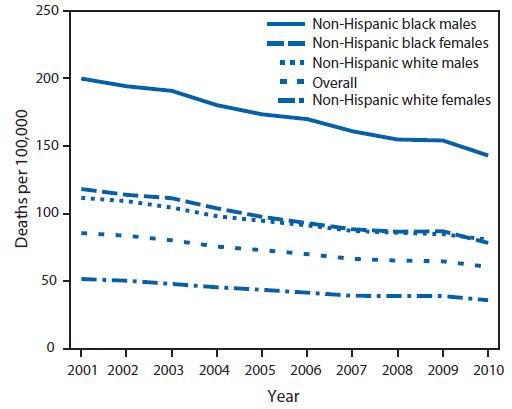
The information reported in the media was taken from the Centers for Disease Control and Prevention's Sept. 3 Morbidity and Mortality Weekly Report. As the DMCB understands it, the CDC authors pulled 2001-2010 mortality data from the National Vital Statistics System. Once that was done, they counted up the number of persons aged less than 75 years who died of "ischemic heart disease," "cerebrovascular disease," hypertensive disease" or "chronic rheumatic heart disease."

So what did MMWR really say?

The total of "less-than-75" deaths in 2001 was 227,961.  For 2010, it was lower at 200,070. Since the population in the U.S. has changed over the last decade, the totals for each of the two comparison years were then expressed as a "per 100,000" statistic.

Since 2001, the "less-than-75" death rate per 100,000 declined by 29%.  The decline averaged 3.8% a year.* Persons age 65-74 years had an average decline of 5.1% vs. 3.3% persons between the ages of 55-64. 

The good news is that Black (3.9%) and Hispanic (4.5%) persons had greater declines than whites (3.6%). The bad news is that they started and ended with a higher death rate.

Here's a visual display of the data:


 The DMCB's take

1. "Avoidable?" The CDC definition implies that perfect control of all cardiac risk factors (for example, cholesterol and weight) for everyone under the age of 75 will result in a 0 per 100,000 cardiovascular death rate. Not so, because those risk classic factors capture some, but not all, persons who succumb to heart attack and stroke.

2. So, this is bad news?  "200,000" deaths is an impressive number, but, on an unadjusted basis, that's about 28,000 fewer compared to 10 years ago. Some additional good news is that the U.S. rate of non-fatal heart attack and stroke appears to have dropped significantly alsoWe are making significant headway in the battle against heart disease.

3. The real story? Persons of color have had the greatest relative benefit but still have the greatest absolute need.  That lingering health care disparity went shamefully unmentioned by CNN and was only briefly mentioned by USAToday.

4. Something for everyone: In their "Conclusions and Comments," the authors of the MMWR paper speculated on the benefits of the (still unproven) Million Hearts Initiative (a Berwick-era idea) as well as "health information technology" and various "community prevention strategies" The DMCB's colleagues in the care management service industry will really like the authors' nods toward "team based care" and how "individuals can work toward reducing their own heart disease and stroke risk."  If the CDC says so, it must be true - assuming there's a good business model.

5. Speaking of speculation, the authors wondered if the greater decline in the Medicare age group (65-74 years) versus the younger age group (55-64) was because of the presence of health insurance. Maybe, but maybe not.  The DMCB also wonders if heart disease is more lethal and less amenable to intervention among younger persons, but can't find any literature to back that up.

6. Politics intrude:  Naturally, the scientists who write MMWR are too classy than to curry favor with the appointees that populate the upper echelons of the federal bureaucracy, but that didn't stop the CDC Vital Signs from shamefully putting in a "making it easier for Americans to afford regular preventive health care through the Affordable Care Act" plug.  The ACA was not mentioned in the MMWR report because the declines mentioned above occurred in the absence of the ACA

The DMCB predicts that when the "avoidable" death rate continues to decline by 3.8% in the coming years, Obamacare advocates will take the credit.


*The DMCB isn't sure how 3.8% for 10 years makes for 29% either, but that's statistics for you.

Image from Wikipedia

Fee-for-Service Medicare Beneficiary Access to Care: The Truth May Be More Complicated

According to this just-released Health and Human Services Issue Brief, the percent of U.S. physicians "accepting new Medicare patients" increased from 87.9% in 2005 to 90.7% in 2015. What's more, this rate of uptake of new Medicare beneficiaries is tracking higher than the rate of "new privately insured patients."

The Issue also says there "may" have been a "very small increase" in the number of docs who have dropped out of the Medicare program. Those drop-outs appear to be greatest among psychiatrists (1.1%) and plastic surgeons (1.6%). In contrast, only 0.35% of primary care physicians have dropped out. These drop-outs have been more than compensated for by the new physicians entering the labor market.

Except for 2015, these data are from the in person interviews that comprise the National Ambulatory Medical Care Survey, The 2015 numbers are described as "interim," because they are based on a mail-in survey.

The Issue brief also quotes a separate MedPAC annual survey of thousands of Medicare beneficiaries. According to the brief, 77% reported they never experienced a delay in getting an appointment for routine care, compared with 76% in 2008.

Case closed, right?  The Disease Management Care Blog's dire warnings about a widespread provider exit from Medicare that was echoed years later by the Wall Street Journal have been overblown.

Not exactly, speculates the DMCB, for the following reasons:

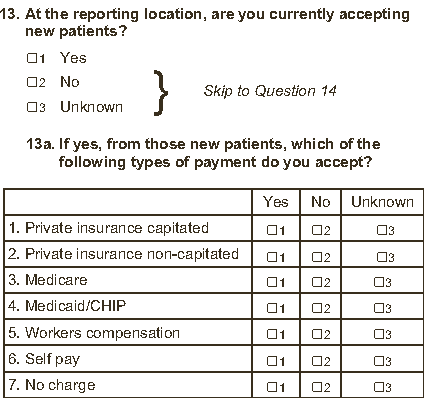
1. The DMCB pulled a copy of the NAMCS survey and found the question that was apparently used to assess physician participation. The screen shot is above. It generically refers to "Medicare," not fee-for-service Medicare.  Because many physicians are members of insurance networks, an affirmative answer could be misinterpreted by the respondents as referring to Medicare Advantage. 

2. There is a difference between "accepting" new patients vs. welcoming new patients. In this seminal New England Journal study, many respondents "accepted" "new" Medicaid beneficiaries, but moved them to the back of the appointment queue.

That being said, the MedPAC survey suggests that isn't happening           - yet - to Medicare beneficiaries. And that's assuming a health care consumer's definition of "delay" hasn't been dumbed down since 2005.   

3. Last but not least, the NAMCS numbers represent a national average. Many areas of the country have seen consolidation of physician practices into larger groups. The DMCB suspects these entities are more willing to accommodate Medicare beneficiaries. It's very possible that the smaller physician-owned practices - many of whom practice in rural areas - are less likely to do so in 2015 than they were in 2008.

Coda:

In yesterday's post, the DMCB was introduced to "twerking." After additional inquiries of the DMCB spawn, it has learned more about this curious phenomenon. 

Which led to this insight:

Q: What is one key similarity between twerking and being an ACO?

A: You better be careful doing both, otherwise you could get screwed.


.

CMS Succumbs to Disease Management Style Spin?

If, thanks to the medical home or disease management, you've witnessed the improvements in patients' care, you've also probably been frustrated by those silly skeptics' insistence on validation. But for traditional research designs, statistical significance, valid comparators and publication in obscure scientific journals, the face validity of nurse-led care management for high risk patients could have ushered in a new era in primary care.

Darn those academic-actuary-statistician-weenies! And double darn CMS for falling for them and not funding the medical home and disease management!

Which is why Population Health Blog readers may enjoy this bit of peer-review schadenfreude. It appears a recent CMS pronouncement that its own "Partnership for Patients Program" prevented early elective deliveries and reduced readmissions is highly suspect, thanks to "a weak design, a lack of valid metrics, and a lack of external peer review for its evaluation." 

Yikes.

It appears the amateurs at CMS used a pre-post design, selected start and stop evaluation points to gin up the outcomes, relied on imperfect administrative data and never bothered with having its outcomes validated by independent review. As a result, we really don't know if the billion of dollars that went into PPP did any good at all.

The PHB appreciates the point. Scientific discipline and peer review go a long way making sure that consumers are getting their money's worth. Now that CMS has gone from an agnostic payer to the centerpiece of health reform, there's a huge risk that its bureaucrats will succumb to shortcuts and spin.

Taxpayers deserve better.  And so do patients.

Image from Wikipedia

A Brainy Health Wonk Review on Health Reform, the Affordable Care Act and Lots More!

Welcome to the Disease Management Care Blog, your host for this edition of the Health Wonk Review. This is a linked summary of the latest and best postings from an informal community of health policy bloggers with informed insights that readers, business leaders, academics and policymakers won't find anywhere else. We invite you to sit back, get a beverage, enjoy a snack and feed your brain as you join thousands of your colleagues and competitors in gaining a deeper understanding of the U.S. health care system.

When when when (of a miscellaneous nature)

When researchers act like politicians: The falsification, fabrication and plagiarism that comprises research misconduct is the topic of a post by Donald Kornfled over at the delightfully named Wing of Zock. Causes include the fear of failure, perfectionism, ethical lapses, grandiosity and psychopathy. Dr. Kornfield reviews potential fixes, including training courses, better mentorship with monitoring and protections for whistleblowers.

When for-profits run amok: Roy Poses at Health Care Renewal scrutinizes one health care system's latest branding campaign and acquisitions, pointing out that the lack of any specificity seems to confirm that this is all about profits, not patients; commoditization, not caring; and corporatization, not community.  Unfortunately, this is not an isolated incident.  You've been warned.

When outcomes are based on flawed research: David Williams of the Health Business Blog asks Al Lewis why no one believes the numbers that underlie the reported effectiveness of population health management, the medical home and wellness. It's easy, says Al: the math has been unnecessarily complicated, actuaries make mistakes and there's selection bias, regression to the mean, confounders. pressure to show success and, most of all, a widespread and regrettable under-recognition of Al's vast expertise.

No Health Wonk Review is Complete Without the Affordable Care Act

Will it never end? If you're interested in even more obscure legal theorizing over the constitutional legitimacy of the Affordable Care Act, then head on over to the Health Affairs Blog. It appears the ACA may only authorize consumer subsidy tax credits in "state" run exchanges. The failure to include federal exchanges in the legislation could be a pesky wording oversight (argued here by Timothy Jost) that is overcome by a common sense understanding of Congress' original intent, or a craftily worded way of giving the states one more incentive to open their own exchanges (argued here by Michael Canon and Jonathan Adler) that could backfire and conveniently hobble the roll-out of the exchanges.

If you had to pick one good thing about the ACA, would this be it? Have you heard about the ACA's insurance co-ops? Think of these as smaller regional not-for-profit health insurance plans that are sponsored by consumer-based organizations. Jay of the Colorado Health Insurance Insider describes how, thanks to a loan from Uncle Sam, a new rural co-op is being launched in Colorado. It plans to open its doors in 2015 with a target of 10,000 enrollees.

And if you wanted to convince skeptical voters about the rest of the ACA, Anthony Wright of the Health Access Blog reminds us that the Brits proudly featured their National Health Service (NHS) in the Olympic Opening Ceremony for lots of good reasons.  The conservative DMCB not only wonders what marketing lessons CMS can learn from this (hint: opening ceremony at the World Series) but it has had its wacky closet Tea Party fears confirmed: "ACA" spelled backwards is "NHS" and its Maximum Kommissar will be First Citizen Don Berwick.

Massachusets reminds of what could follow the ACA: David Harlow of the HealthBlawg looks at what the Bay State is doing now that Romneycare's reforms neglected to tame health care cost inflation: Regulations that prohibit excessive provider price increases,promotion of the medical home and ACOs, greater market transparency, more public financing and physician liability reforms.

And what do the brokers think of the ACA? Hank Stern of the InsureBlog describes a blow back on the insurance provision that excess administrative costs must be rebated back to the beneficiaries.  Not only is it very burdensome to calculate in group policies with individual underwriting, but the tax implications are best considered in a "Michelob teaching moment" (that'll make more sense when you read the entire post, but trust the DMCB: it's not good).

Accountable Care Organizations?  Amazingly, only one HWR submission!

Is the DMCB really a DmCB?  DMCb?  Kerry Willis of the Health Talent Transformation blog calls on docs to resist the siren call of the ACOs' easy money. Look closely, he says, and you'll notice a strong resemblance the 1990s-style PHOs that were long on hospitals' interests and short on physicians' needs. He suggests that a better name would have been pHO. That's why he says unless ACOs use the physician-led patient centered medical home or concierge practices, a better name for them would be AcO.

Of Budgets, Priorities (and their evil architects)

In the taxpayers-get-what-they-pay-for-department, Liz Borkowsi of ScienceBlogs reviews a Health Affairs study on physicians' willingness to care for coming wave of new Medicaid beneficiaries. Based on a representative sample of docs, 69% are currently accepting such patients, but the numbers vary by geography (the rate is only 40% in New Jersey, for example).  The researchers estimate increasing payment rates to match Medicare's fee schedule would likely increase acceptance by an average of 10 points. One solution is expanding the nation's 8000 community health centers with the $11 billion allocated by the ACA. Unfortunately, that money has been a tempting target for budget-deficit minded politicians.

...and here's more on the taxpayers-get what-they-pay-for: Jason Shafrin of the Healthcare Economist blog looks at Medicare's reimbursement for for Alaskan physicians and finds evidence that new and established Medicare beneficiaries are having trouble finding a primary care physician. It seems the physicians would rather fill their clinics with better paying commercially insured patients.  If that income stream ever gets cut off, thinks the DMCB, the docs could always turn to the remunerative world of blogging.

How about what patients don't want to pay for? Medical student Justin Jones examines end-of-life care and finds doctors who forgo aggressive treatment of their incurable cancers may be role models for the rest of us.  Yet, despite some compelling anecdotes and the disdain for death panels and cost considerations, the provocative DMCB still wonders how insurers and their risk-bearing providers will reconcile an obvious conflict of interest over death with dignity and reducing claims expense with upside gain sharing.

In the physicians get annoyed-on-how-they're-monitored department, everyone agrees we need to measure health care quality and make providers more accountable.  Unfortunately, making that happen in the real world is proving difficult. Brad Flansbaum of the Hospitalist Leader blog offers a quick primer on CMS' early efforts at physician report cards in Kansas, Iowa, Missouri and Nebraska and explores the pros and cons of measurement at the individual, group or hospital level.

Tough Choices: Chris Langston, the Program Director at the John A Hartford Foundation blog points out that the dysfunctional economics of Medicare and Medicaid are ethically troubling. Decreased payments for geriatric services are part of a troubling pattern of discriminating against the poor and elderly. He asks if it's time to recast the political debate over the current scope of government insurance as a beneficiary rights issue.

I knew it! Is Republican VP candidate Paul Ryan a real budget hawk, or is his record in Congress marred by the realpolitik of partisanship and party loyalty? Joe Paduda finds compelling evidence of the latter.

Want more dirt on Paul Ryan? Harold Pollack over at healthinsurance.org says he's "extreme," a "pampered millionaire known to purchase $350 wine" with proposals "opposed by huge middle class constituencies" that would lead "between 14 and 27 million low-income Americans to lose health coverage" and cause "deep" cuts in highway repair, K-12 education, environmental protection, public health and law enforcement."

Heroes vs. affordability: While the U.S. military has increased the visibility of post traumatic stress disorder (PTSD), Lynch Ryan of Workers Comp Insider blog reminds us that our nation's police force members are not immune. Cops are far more likely to die by their own hand than be killed in the line of duty, and their rate of suicide per 100,000 matches the U.S. army. Lynch explores the workman's compensation implications: should treatment of the disabling stress of witnessing violence be covered, or is this part of the job?

Your next host for the Health Wonk Review will be Louise Norris of the Colorado Health Insurance Insider Blog.

Medicare Readmissions Equals Revenue Cuts Equals Hospital Consolidation. Here's Why

This way to consolidation....
Disease Management Care Blog readers may recall that Medicare's Hospital Readmissions Reduction Program was among the many provisions of the Affordable Care Act. 

According to the finalized regulations, if a hospital's readmission rate within 30 days for heart attack, heart failure or pneumonia exceeds an established norm (using three years of data based on a minimum of 25 patients with a statistical risk adjustment to account for co-morbid conditions), that hospital's Medicare payment rates will be reduced for all discharges in the following year. The reduction, depending on the excess rate, can go from zero (readmissions meet the norm) to a maximum of 1% (the hospital penalty results in payment of only 99% of the applicable fee schedule).

Now, Kaiser Health News has just looked at the numbers and calculates that, thanks to the HRRP,over 2000 hospitals will forgo close to $300 million. According to KHN, 278 hospitals - including some household names - will achieve the dubious distinction of a full 1% reduction.  You can check out how your local hospital will likely fare here.

While readmissions themselves are a significant problem, the approach used by the HRRP has its own set of under-appreciated methodologic challenges (as noted here and here). Now that hospitals are about to get battered by a well-meaning if flawed payment system, your DMCB raises one more red flag:

This will drive hospital consolidation.

That may well be one intent of the law. Cheesecake Factory logic tells us that large hospital systems have the intellectual and capital resources to systematize care, apply best practices, reduce variation and maximize outcomes.  Rather than weep for those hospitals that are losing income, Washington's policymakers are probably hoping that the losers have one more reason to join forces with the bigger, smarter and more efficient hospitals or systems nearby or in the next state (especially the ones with a smartly run disease management program).

Yet, whether or not hospital consolidation alone would make a palpable difference in cost or quality remains to be seen (as indicated here and here). What could happen instead is the rise of too-big-to-fail, politically connected and market-dominant health care systems.

We'll see.

Image from NIHSeniorHealth

Pioneer ACO Program Results: Why Saving Money for CMS Doesn't Mean The Business Model is Viable

According to South Dakota researchers, the predator status of Tyrannosaurus rex can no longer be questioned. After finding one of its teeth embedded in the healed spine of a Hadrosaurus, paleontologists now believe T rex was a fearsome hunter, not an carrion munching opportunist

But, asks the Disease Management Care Blog, how do we really know that that Hadrosaurus wasn't  pretending to be dead when the T rex took its bite?  Alternatively, the Hadrosaurus could have been sleeping and only looked dead to a slow-witted and lazy T rex

Dino doubts, says the DMCB, remain.

Such is the level of skepticism that the DMCB is bringing to its reading of the recent CMS press release describing the initial results of the Pioneer ACO program.  CMS says "positive" and "promising." The DMCB says "problematic" wonders if, like the T rex dilemma, there isn't an alternative interpretation.

The DMCB explains.

Recall that the Pioneer ACO program is designed to test whether large integrated organizations can be successfully rewarded for reducing health care costs through a program of "shared savings."  Under the program, if the savings exceed a minimum threshold, CMS will remit a portion of the upside savings back to the participating organizations.

According to the press release, the health care costs for the 669,000 Medicare beneficiaries cared for by the 32 Pioneer ACO program providers grew only .3% versus .8% for a parallel group of "similar beneficiaries." 13 organizations exceeded the savings threshold, which will lead to Uncle Sam writing checks for $76 million in shared savings.

This front page article in The Wall Street Journal has more detail. It says 18 of the 32 reduced health care costs, which leads the DMCB to conclude that five otherwise "successful" participants did not cross the required savings threshold. Two participants lost money. That, in turn, suggests the remainder, or twelve, broke even.

Details on how each individual institution fared are not readily available.  According to WSJ, Boston's Partners Healthcare reduced Medicare claims expense by $14 million.  They will be rewarded with a shared savings check of $7 million. Wisconsin's Bellin-ThedaCare will get "several million."

Good "win-win" news for the Pioneer organizations, CMS, Uncle Sam and U.S. taxpayers, right? A critical mass (40%) achieved millions in shared savings, which means proof of concept met and that a key part of Obamacare is successful, right?

"Not exactly," says the DMCB.

It figures 100% of the participating organizations had to each invest millions for personnel and other infrastructure to pursue the Medicare savings in the first place.  In other words, they were in the red before Pioneer even began.  That means that, in addition to the two participating organizations that lost money, the 12 that "broke even" as well as the 5 that did not make threshold also lost millions

That's 19 losers or almost 60% of the participating organizations.

In addition, it's possible that for some of the 13 "winners" that the shared savings awards won't  match their up-front multi-million dollar investment either.  Assuming that's true, it's possible that as many as two thirds of the Pioneer organizations lost money. No wonder 9 of the participants have signaled a desire to exit the program.

The DMCB's dinosaur analogy may be apt.  Given a two out of three likelihood of losing millions in the first year of operations, ACOs may just be too big and complicated to survive in the current health care environment.  Nonetheless, the Pioneer program will continue and the DMCB will stay tuned for the Year 2 results.

In the meantime, the DMCB wishes CMS good luck in using these "positive" and "promising" results to expand the program anytime in the near - or distant - future.  

The Majority of Medicare Spending Variation Is Unexplained

From time to time, the Population Health Blog spouse finds that her husband is insufficiently attentive.  During a recent conversation about that very topic, things stopped when the PHB pointed out the window and exclaimed "Look! A squirrel!"

Naturally, the spouse is curious about the PHB's erratic attentiveness.  Is it how its brain is hardwired?  Too much sugar? Substandard parenting?  And of all those possibilities, how much do each contribute?

That introduction should help the PHB and its readers check out this just-published Health Affairs paper on Medicare's erratic spending habits.

As PHB readers know, Medicare's patient costs patient vary from one locale to another by thousands of dollars, with no discernible impact on survivorship or quality. One narrative is that the health system is being consciously or unconsciously manipulated by doctors and hospitals at a regional level.  Another is that poverty is causing patients in some areas of the country to have have more than their fair share of health problems.

Enter Laurence Baker et al, who wanted to know if patients' preferences are playing a role.

The answer is that it does. But, compared to hospitals and patient income, not that much.

The authors obtained Medicare claims data from 2005 and sorted it by Medicare Hospital Referral Region (or "HRRs," which can span several counties). They wanted to know if HRR costs correlated with 1) county and zip code-level median income, 2) self-reported health status, 3) the availability of doctors and hospital beds and 4) a six question survey that ascertained respondents' preferences for care based on scenarios like chest pain or cough.

The results?

The HRRs were grouped and sorted into low to high spending quintiles.  As the quintiles increased, so did the number of hospital beds per thousand (2.2 low to 2.5 high), which suggested that the supply of services increases health care utilization. Doctors were negatively correlated (the more docs, the lower the spending, 214 per 100K low vs. 193 per 100K high). 

Income was not correlated.

Patient preferences were correlated but only by a small amount (just over $100 across the quintiles).

It's one thing, however to have a correlation, it's another to know the strength of the correlation.  Using regression analytics, the authors found that the availability of hospital beds and doctors could independently account for 23% of the low to high variation across the quintiles. Health status and income seemed to drive another 12%. Patient preferences explained another 5%.

While that explains approximately 40% of the low to high variation across the quintiles, that means 60% remains a mystery. 

In other words, if hospital services, patient economic disparities and patient preferences were completely neutralized by very enlightened central planning, wholly just income redistribution and perfect patient education, only 40% of the cost variation across the United States would go away.  Boston would still cost more than Boise.
 
The PHB's take:

1) Squirrels abound: there is still a lot that we don't understand about the national swings in Medicare's costs.  Some areas are cheap, others aren't and the majority of that has little to do with the availability of hospital services, poverty or beneficiary preferences.

2) Any wonk, policymaker, politician, academic or blogger who offers "a solution" to Medicare's variation is kidding themselves.  The majority remains outside the reach of laws, regulations or payment reforms.

3) Compared to Medicare, PHB's variable attention span is a comparatively modest problem.  The spouse should take some comfort in that.

Image from Wikipedia

CMS' and The Possible Obsolescence of Its Versions of the EHR, PCMH and ACO

Let thousands bloom
After reading this Huffington Post (HuffPo) article by National Physicians Alliance board member Ricky Choi, the Disease Management Care Blog is worried.

According to Dr. Choi, sometime last week, the White House hosted a meeting of national physician leaders to talk about the Affordable Care Act.  HHS Secretary Sebelius was there along with other CMS administrators.  The conversation focused on electronic health records (EHRs), the patient centered medical home (PCMH) and accountable care organizations (ACOs). 

The DMCB is not worried about another Cabinet member blurring the line between policy and election-year political grandstanding.  It is not concerned that naive ACA supporters are unwittingly being used to promote the Administration's health reform nostrums.  It is not surprised that this flattering article seemed only fit for liberal HuffPo and is destined to reinforce the biases of an already committed base. It is not wondering about a curious commitment to care approaches that still are not conclusively backed up by a critical mass of peer-reviewed evidence. Finally, the DMCB isn't shocked that it was not invited to the White House.

Rather, says the DMCB, it's worried that this is all the White House has.  A precious day of CMS leadership attention spent in recycling stale EHR, PCMH and ACO acronyms and jargon with a fawning circle of fellow ideologues? What gives?

While the CMS' EHR's meaningful use program continues, health care technology is evolving away from fixed desktops and mainframes toward mobile smart devices, apps, the cloud and social media. The transition is bound to shift doctor's and patients' highly personalized management of information in ways that we haven't thought of. 

CMS' "PCMH Ver. 1" entails a wholly contained primary care provider team reimbursed with a monthly fee.  In the meantime, other health systems and insurers are already figuring out how to simultaneously out and insource team members depending on local resources and patient risk. 

CMS is just getting its ACO pilots and programs off the ground. In contrast, commercial insurers launched a host of "accountability" initiatives years ago. Many are focused on a single clinical domain (such as avoidable emergency use, patients who are high risk, or post-discharge readmissions) and are highly flexible and expandable.

The distinctly modular approach to health IT, medical homes and provider-insurer risk transfer certainly contrasts with CMS' plodding one-size-fits-all and top-down planning.  While a thousand commercial sector flowers bloom, CMS risks presiding over demos and pilots that could become obsolete before the the data collection has been completed.  Why aren't they meeting about that?

Last but not least, the Administration seems to be putting all of the ACA's eggs in the EHR, PCMH and ACO baskets. If they don't work out, it would further undermine the brand of the star-crossed Affordable Care Act.

Image from Wikipedia
Leaderboard