
Leaderboard
728x15
Showing posts with label Outcomes. Show all posts

Ten Rules for Health System Boards of Directors to Follow to Reduce the Risk of Fraudulent Outcomes Reporting and Scientific Misconduct

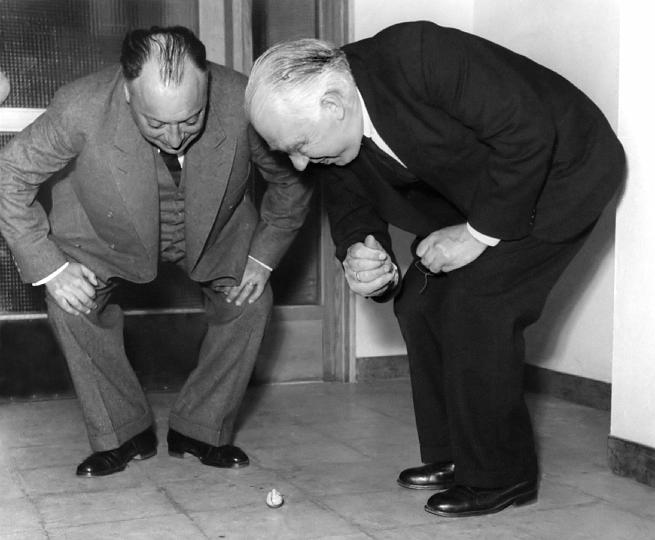
Enjoying a good spin
Are you on the Board of Directors for a large health service provider, population health vendor, integrated delivery system, managed care organization or other care corporation? 

If so, your company is likely collecting, analyzing and publicly reporting quality and cost data. Not only do superior results in journals, meetings, splashy web sites and glossy marketing materials present a competitive advantage, achieving superior outcomes is part and parcel of your organization's mission.

The Disease Management Care Blog reminds Board members that intentionally or unintentionally misrepresenting outcomes is an existential threat to health care organizations.  Having to retract a publication, correct a white paper, meet with grumpy regulators, confront claw backs, deal with a whistle-blower, respond to allegations of interpretation spin, uncover suppression of bad results or defend the integrity of your brand is something no Board wants to deal with.

To the DMCB's knowledge, this hasn't happened to any ACOs, risk contracting systems, managed care organizations or population health or wellness vendors.

Yet. 

It's just a matter of time.

While the risk of allegations of scientific misconduct can never be reduced to zero, the DMCB offers up ten best practices for Boards to follow:

Reduce opportunities by:

1. Exhibiting healthy skepticism regarding all outcomes reported by your management team, especially if the results seem to be too good to be true.

2. Insist that your management team has two persons with access to any data base, and that they have separate reporting relationships.

3. Insist that your management team has two persons independently involved in any data analysis, and that they have separate reporting relationships.

4. Be familiar with and insist that the rules on research on human subjects be followed.

5. Maintain a low threshold for conducting internal or external audits of any databases and any interpretations of those data.

Combat any rationalizations that fudging outcomes is OK by:

6. Recruiting Board members with research expertise.

7. Explicitly engage the Audit Committee and any other Board member or committee with oversight of risk to view "outcomes" with the same level of scrutiny as your company's financials.

8. Maintain an ethical "tone at the top" when it comes to research.

9. Have a disaster plan ready to go.  For starters, train your Board on how to deal with hostile media inquiries.

Reduce incentives by:

10.  Asking your CEO if any compensation plans including bonuses or unwittingly promoting unethical or fraudulent behavior.


Of Hospital Alarms and the Lessons for Population Health Alerts

This hot-off-the-presses JAMA article by Vineet Chopra Laurence McMahon describes how the cacophony of alarm beeps and bells from hospitals' intravenous pumps, remote EKG monitoring, call buttons and other monitoring devices are paradoxically threatening inpatient safety.  While intent of all that noise is good, its effectiveness is compromised by a high false negative rate, making it difficult for docs and nurse to distinguish between simple vs. a life-threatening problems.

It seems researchers are finally discovering what distracted providers have known all along: that the all beeping buzzing and binging interferes with focusing on their duties and workflows. As a result, it's not unusual for some nurses and docs to resort to disabling the alarms.

The authors offer up some simple suggestions that the former hospitalist Disease Management Care Blog agrees with.  But since the DMCB is also interested in population health, it couldn't help but think of the parallel lessons about "alerts" that also imbue population health management. 

As PHM workers know, it's not unusual for vendor and medical home care managers to receive lists of patients who have missed appointments or have tests results that are outside of optimum range.  Instead of a noisy work environment, these health care professionals have a cluttered in-box.

To wit, the lessons are to be less one dimensional:

1. Establish priorities based on risk: Just as an alarm triggered by ventricular fibrillation should be distinguishable from an alarm from an innocuously malfunctioning intravenous pump, patients with test results that are slightly outside the optimum range should be distinguishable from patients with more pressing care needs.

Depending on the population, the prevalence of disease and available resources, clinical algorithms and predictive modeling should be able to prioritize the patients with the greatest needs. Start by assigning priority alerts to those patients and work your way down.

2. Accommodate patient priorities and clinic work flows: Just as an IV pump could best signal a problem only when the nurse enters the patient room, so must population health anticipate how to best accommodate a patient need based on what the patient wants and what the doctor can provide. That not only means putting the informed and engaged patient in control, but also understanding the network and having a working familiarity with each clinic's characteristics and culture. 

3. Use multiple signals:  One outcome measure that is out of compliance may mean little to a real world patients and the real providers who take care of him or her.  A blood test that is out of range is far more pressing if it also accompanied by problems involving other organ systems and may be more actionable if  it is the result of not being able to afford a medication co-pay.  Achieving a particular outcome may be less important than other issues, such as other medical needs or bigger problems such as food and shelter that fall outside traditional health care.  No medical problem can be fixed in an information vacuum.
 
The DMCB took the JAMA article's last paragraph and reworded it slightly:

Simple outcome measurements no longer establish an umbrella of quality. The scope and design of these measurement systems and their alerts must shift from the status quo to a biologically valid, clinically relevant, patient-centered model. Existing technology allows integration and intelligent assessment of patient data to create advanced alert systems. Changes to design and implementation of alerts are necessary to improve patient outcomes.

Image from Wikipedia
Leaderboard