Leaderboard
728x15
Showing posts with label Veterans Administration. Show all posts

The Relationship Between Discharging Patients From the Hospital Too Early and the Likelihood of a 30 Day Readmission: Treat, Street and Repeat.

I'm baaaaack!
When persons are admitted to a hospital, insurers' payment rates are based on the diagnosis, not the number of days in the hospital (known as a "length of stay").  As a result, once the admission is triggered, the hospital has important economic incentive to discharge the patient as quickly as possible.  The Disease Management Care Blog's physician colleagues used to refer to this as "treat, then street."

Unfortunately, discharging patients too soon can result in readmissions.  That's why the DMCB has agreed with others that diagnosis-based payment systems and a policy of "no pay" for readmissions were working at cross purposes.  Unified bundled payment approaches like this seem to be a good start.

But that's all theoretical.  What's the science have to say?

Peter Kaboli and colleagues looked at the push-pull relationship between diagnosis-based payment incentives  and the likelihood of readmissions in a scientific paper just published in the Annals of Internal Medicine. 

The authors used the U.S. Veterans Administration (VA) Hospital's "Patient Treatment Files" to examine length of stay versus readmissions in 129 VA hospitals.  The sample consisted of over 4 million admissions and readmissions (defined as within 30 days and not involving another institution) from 1997 to 2010. The mean age started out at 63.8 years and increased to 65.5 years, while the proportion of persons aged 85 years or older increased from 2.5% to 8.8%. Over the years, admissions also grew more complicated with a higher rate of co-morbid conditions, such as diseases of the kidney (from 5% to 16%).

As length of stay went down, readmissions should have gone up, right?

The answer was yes and no.

Yes, if the data were trended over time: Over the 14 year period of observation, the number of days in the hospital (length of stay or LOS) decreased from 6.0 days to 4.3 days.  Yet, as LOS decreased, readmissions also decreased from 16.6% to 15.2%. 

The decreases held up when the LOS was risk-adjusted for hospital and patient characteristics.  There was also no increase in mortality rates

No, if hospitals were compared to each other:  Hospitals with risk-adjusted low lengths of stay had higher readmission rates compared to their average peers.  In that group, each day of saved LOS was associated with a 6% increased rate of 30-day readmissions.

It gets even more complicated.  As the LOS increased beyond the average, each additional day in the hospital was associated with a 3% increased rate of 30-day readmissions.

What should the DMCB learn from these data?  Keeping in mind that the VA is not necessarily generalizable to the typical community medical center,

1. Over 14 years of worth of VA data for 129 hospitals suggest it is possible to have your cake (a lower LOS) and eat it too (lower readmissions).  That's the good news.

2. While overall performance improved over the years, between hospital comparisons showed there is a "U" shaped relationship between days in the hospital and the likelihood of readmission.  The DMCB agrees with the authors: premature discharge before the patient is ready is associated with an 6% per day readmission rate, while patients who are very sick and have to stay a few extra days in the hospital are also at risk to the tune of 3% per day.  That's the sobering news.

What are the implications?

Overzealous efforts to discharge patients can backfire with readmissions.  It appears there's an optimum length of stay that minimizes, but will never eliminate, readmissions.

Patients who do go home "too soon" or need extra days in the hospital appear to be at special risk.  Accountable care organizations and population health management service providers should use this information to target patients at special risk of "treat, street and... repeat."

The Antifragile VA: Lessons from the NFL

Unacceptable behavior. Tone deaf sanctions. Superficial investigations blaming a few bad apples. Contrite leadership promising change.

Population Health Blog readers might think that this is about the National Football League (NFL), but it's also about the Veterans Administration (VA) whitewash.

But, in reality, this is about something much bigger: the unpredictably predictable dysfunction that happens to large and complex organizations. Mix insular leadership (Commissioner or Secretary), an unaccountable bureaucracy (owners or appointees), huge budgets (as in very huge) with hidebound government oversight, and something very big and very bad is bound to happen. Sooner rather than later.

That something often remote (an elevator or a Phoenix clinic), is only obvious in retrospect (atrocious male violence or gaming outcomes), signals a deeper problem (player recruitment or leadership integrity) and results in a loss of reputation that lasts for years. 

Think baseball and steroids, NASA and shuttles, GM and starters, Presidents and red lines.

This is classic antifragility.  As we continue to concentrate economic and social power into large organizations, logarithmic jumps in complexity will lead to rare, contagious, catastrophic and unpredictable crack-ups. Naturally, our response will be to layer in more systems complexity.

Assuming large and complex ACOs prove they can really conjure money out of providing fewer health services, the PHB believes their next biggest threat is a black swan event. A huge patient data breach.  Withholding care.  Cutting corners.  Something else. You read it here first.

In the meantime, smart PHB readers will discern that there are some important differences between the NFL and the VA:

                                  VA                                            NFL
    
Problem:               Waiting lists.                      Switches and fists.

Involving:                   Docs                                     Jocks

Result:          Congressional indignation.       Sponsor consternation

Solution:             Budget Conference                    Press conference.

The Media:     Monday morning quarterbacking   Monday Night Football

So the chief gets:          Replaced                         Breathing space

The real problem:        A monopoly                         A monopoly

What The Electronic Health Record (EHR) Can, and Cannot, Do

"The widespread use of electronic health records (EHRs) in the United States is inevitable. EHRs will  improve caregivers' decisions and patients' outcomes. Once patients experience the benefits of this technology, they will demand nothing less from their providers."

"... lives can be saved, outcomes of care improved, and costs reduced by transforming the healthcare system through the appropriate use of IT and management systems."

While the breathless exuberance if the EHR cabal continues to spin on, the Disease Management Care Blog ran into two real world studies from strong institutions that tell it what the EHR can, and cannot, do.

Briefly.... 

In the first study, Kaiser Permanente of Colorado initiated an interactive voice response outbound telephone campaign to eligible patients that, according to its EHR, had not undergone screening for colon cancer. The call lasted 5 minutes and used the telephone keypad to solicit additional information and patient preferences about screening. If the call was not completed, a mail-in screening packet was sent to the patient with a reminder letter 4 weeks later. In addition to the IVR campaign itself, there were other provider as well as staff educational and promotional campaigns, individualized physician reports and quality incentive programs. Patients with known high risk (for example, a history of polyps), removal from the screening program by request of their doctor or evidence of prior screening were not included. 58,440 patients got the IVR.  Their mean age was 59 years and 53% were female.

Results: 45% of those exposed to the IVR eventually completed the screening.

In the second study, the Veterans Administration "VistA" EHR was mined to find patients who had received at least 2 separate prescriptions for a cholesterol lowering drug during a prior 9 month baseline period that was followed by an "absent" prescription.  If a "past due date" was found, it was assumed that the patient was having a problem with medication compliance. Of an initial 1000 "past due" patients, closer examination of the records revealed that 176 had gotten the drug.  Of the 824 left over, 95 had died and 17 had entered nursing homes which were supplying the medicine. Patients were then surveyed about their medication use and 302 indicated that they had been told by their physicians to stop the medicine, had had side effects, had switched to alternative treatments or had gotten their medicine from outside the VA system.

Results:  After all this, it turned out that only 20% of the patients who, according to the EHR, had prematurely stopped their cholesterol medicine, were correctly identified.

The most generous interpretation of both studies is that something is better than nothing.  The DMCB agrees but points out that having an EHR doesn't automatically lead to 100% cancer screening rates or 100% medication compliance.

In the colon cancer study, the authors had to turn to a free standing IVR system instead of using tools resident in the ER (physician prompts, automated patient letters) to achieve their cancer screening success.  The EHR was necessary, but not sufficient.

In the cholesterol drug study, researchers had to expend a lot of time and energy to clean up the EHR's data base. While 20% of patients at apparent risk will eventually benefit, finding these patients has gone from pulling individual paper charts to pulling individual patient data.

Improve decisions and outcomes?  Save lives? Reduce costs?  You be the judge. 

Godzilla and VA Wait Times.

As predicted, the Veterans Administration (VA) waiting-list fracas is going from bad to worse.  Seeking refuge from all the bad news, the Population Health Blog naturally responded by inviting the spouse to go see the new Godzilla movie in IMAX 3D.

Mysteriously, she declined the invitation. 

Despite the two-plus hours of lonely and noisy cinematic excess, thoughts about the VA still intruded. As a result, the PHB has created another multiple choice test that tests readers' awareness of popular culture and this corner of health care policy. 

Good luck!

"Breaking Bad" actor Bryan Cranston is casted as scientist Joe Brady who barely survives a mysterious catastrophe at a Japanese nuclear plant. Years later, he (select the best answer):
 
1. is convinced that there is a cover-up
2. is still awaiting the report of the Nuclear Administration Inspector General who has yet to find any wrongdoing by anyone who is in charge
3. has an annoying level of anxiety that, in the opinion of the PHB, warrants industrial-strength doses of Xanax


At several key moments in the movie, there are sudden malfunctions of electronic equipment. That's because (select the best answer):

1. of monster-sized electromagnetic pulses
2. they're networked with the VA's computer system that manages wait lists
3. they're not, as the PHB spouse likes to frequently point out, Apple-based products


Godzilla's arch enemies are two large bugs that (select the best answer):

1. have unbalanced the natural order and must therefore be destroyed
2. the White House first learned of when they read the news reports
3. are a couple and - thankfully - were not filmed when the female's eggs were fertilized prior to their implantation in the ceiling of the San Francisco subway system.


Godzilla's rampage results in numerous American military injuries.  That's (select the best answer):

1. because the monster has very big feet
2. OK, because the injured will be able to get care outside of the Veterans Administration health care system
3. the result of the generals failing to heed the lessons of the 1960s Godzilla movies that repeatedly demonstrated tanks and machine guns are to no avail.


At the end of the movie, Godzilla appears to be taking a dirt nap. He (select the best answer):

1. is merely tired and has decided to rest
2. is providing us with a useful reminder us that even prehistoric creatures had to deal with wait-times.
3. awakens when a San Francisco veterinarian ill-advisedly attempts to obtain a nasal biopsy.


The Two-Sided Iron Triangle of Cost and Access and What It Means for Health Reform in 2015

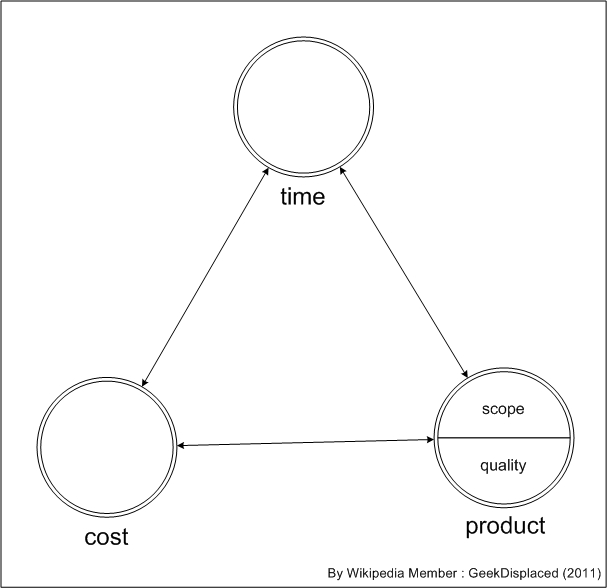
From time to time, the Population Health Blog likes to refer to this article on the "iron triangle" of health care reform. Using classic project management theory, it suggests health care planning is:

a) bound by 1) cost, 2) quality and 3) access, and

b) if there are limited resources, health system planners can only optimize two out of three.

Want to decrease costs?  Either quality will go down or access to care will decline. 

Want to increase access?  Docs and operating rooms will spend less time with patients (quality will suffer) or costs will go up, because you have to hire more docs or build more operating rooms.

Suppose you want to increase quality?  Because most interventions that increase quality are not free, it'll cost you.  Alternatively, fixed budgets and resources will have to be tasked to additional needs, so access will suffer.

It's admittedly simplistic, but this framework can be used even by the amateurs in the White House to better define the Veteran Affairs scandal. As the PHB understands it, VA administrators wanted to increase quality (more primary care, better mental health services), but they didn't have the budget to match it. Access declined and, voila, waiting lists developed.

Which brings the PHB to the insurers' dilemma.  The generous narrative is that commercial and government insurers can leverage "quality" and somehow increase access for more persons with insurance and/or "bend the curve" of cost inflation.  The "iron triangle" says that's not true and the PHB agrees.

That's because:

1) while it's possible to statistically assess outcomes in primary care settings, there is a shortage of primary care providers.

2) it's far more difficult to statistically assess outcomes in specialty settings, where there are limited numbers of patients, fewer commonly accepted outcomes and a greater impact of patient variation.

In other words, quality is neutralized. That means health care is a two sided triangle.

Assuming quality is now constant, the PHB now has another reason to predict that insurers will have only two options in 2015:

1) increase access to care for more persons, but that means increasing, not decreasing costs. That means higher out-of-pocket costs for patients, or lower reimbursement for providers.

2) lower costs, but that means decreased access to care. Providers will refuse to contract or more restricted provider networks be created.

Image from Wikipedia

The Veterans Administration Scandal: Implications for Health Reform and A Call for Clinical Research Into the Reported Death Rate

As the Population Health Blog understands it, dozens of veterans died while waiting for outpatient appointments at the Phoenix Veterans Administration (VA) Hospital.  Approximately 1500 vets were assigned to an "off-the-books" waiting list that made the clinics' official waiting times appear shorter than they really were. Because waiting times are an important feature of health care quality, the VA was probably holding its local administrators responsible for routinely measuring and reporting them up the chain of command.  If reports are true, instead of using their increased budgetary resources to provide more care, the Phoenix bureaucrats allegedly responded by gaming the system.

And the scandal is flourishing.  Investigations suggest other VA hospitals may have also adopted the same wait-list legerdemain.  A senior D.C. official resigned fast-tracked his already scheduled retirement. The VA Inspector General's investigation prejudgment is that none of the deaths can be attributed to delays in care. You can't make this stuff up.

"Good grief!" says the PHB.  Numerous articles like this, this and this had convinced lay writers, impressive policy wonks and countless physicians that this version of government run health care was not only the greatest thing since the invention of Medicare, but a model for U.S. health care reform.

Not any more.

That's why the implications of this extend far beyond a huge stain on the VA's reputation.  Once again, taxpayers are witnessing another failure of big government. While this has nothing to do with Obamacare, voters have another reason to doubt Washington's ability to competently deliver on its health care promises.

In the meantime, the PHB offers the VA plutocrats one approach to figuring out if the waiting lists were associated with higher death rates.  It's possible, thinks the PHB, to use propensity score matching within the VA's much-admired electronic health record system to retrospectively create a cohort of patients that were similar in every way except for being on the wait list.  A similar death rate in that group - demonstrated by unbiased scientists outside the control of the VA - would go a long way toward reassuring all of us that this debacle was limited to customer service.      

Image from Wikipedia
Leaderboard